Lifty
LiftyDesigned NFT Trading from 0→1
and helped the platform become
the #1 NFT marketplace on BNB
Chain by trading volume, reaching
$276M+ in total trading volume
Lifty is a multichain NFT trading app that reached 1.3M+ monthly active users at its peak. I led the end-to-end design of NFT Trading from concept to launch, then scaled the product by designing Launchpad, Drops, and wallet management flows for buying, swapping, receiving, and sending assets across networks.
 Lifty
LiftyDesigned NFT Trading from 0→1 and helped
the platform become the #1 NFT marketplace
on  BNB Chain by trading volume, reaching
$276M+ in total trading volume
Lifty is a multichain NFT trading app that reached 1.3M+ monthly active users at its peak. I led the end-to-end design of NFT Trading from concept to launch, then scaled the product by designing Launchpad, Drops, and wallet management flows for buying, swapping, receiving, and sending assets across networks.
Context
When Lifty launched, the NFT market was growing fast, but most products
still served separate blockchain ecosystems. Lifty set out to bring creators
and collectors together in one multichain product.
Problem
NFT liquidity was split across different blockchains and marketplaces. Collections
could reach only buyers within their own ecosystem, while collectors had to search
across multiple platforms. This made NFTs harder to discover, buy, and resell.
Buying and selling an NFT was also more complex than it needed to be. Existing
platforms buried simple actions under crypto details, making it harder for users to
understand what to do and complete a trade.
Goal
Build NFT Trading as a simple multichain experience for discovering, evaluating,
buying, and selling NFTs. Give creators a clear way to launch collections and build
liquidity through active trading.
My role
I led the end-to-end design of NFT Trading from concept to launch. I defined
the product structure, core trading flows, and UX architecture for discovering
and evaluating collections, buying and selling NFTs, and making offers. I then
designed Launchpad, Drops, and asset management as the product expanded.
Strategy
The core decision was to build one product for both sides of the NFT market:
make trading across networks easier for users and help creators launch collections
and build liquidity.
1. Simplify NFT trading across networks
Give users one place to discover and evaluate collections, then buy
and sell NFTs, make offers, or use Sweep to buy multiple NFTs at once.
2. Help creators launch collections
Give creators a simple way to launch collections and build liquidity.
3. Attract buyers to new collections through Drops
Help creators attract buyers through Drops and give users
a simple way to join new launches.
4. Make assets easy to manage
Bring NFT and token balances, Buy, Deposit, Receive, Swap, Send,
and transaction history into one place, making NFT trading across
networks easier.
Success criteria
I defined success at two levels: whether users could complete the core flows,
and whether those flows supported adoption, liquidity, and NFT supply across
the product.
⁕⁕ Increase completed NFT purchases and sales across supported networks
⁕⁕ Reduce drop-off from collection discovery to a completed trade
⁕⁕ Increase completed collection launches
⁕⁕ Grow participation in Drops and trading activity for new collections
⁕⁕ Drive adoption of asset management flows that support NFT trading
At the product level, monthly active users, total trading volume, and NFTs
created provided context for adoption, liquidity, and supply.
SOLUTION 1
Create a clear path from
discovery to trade
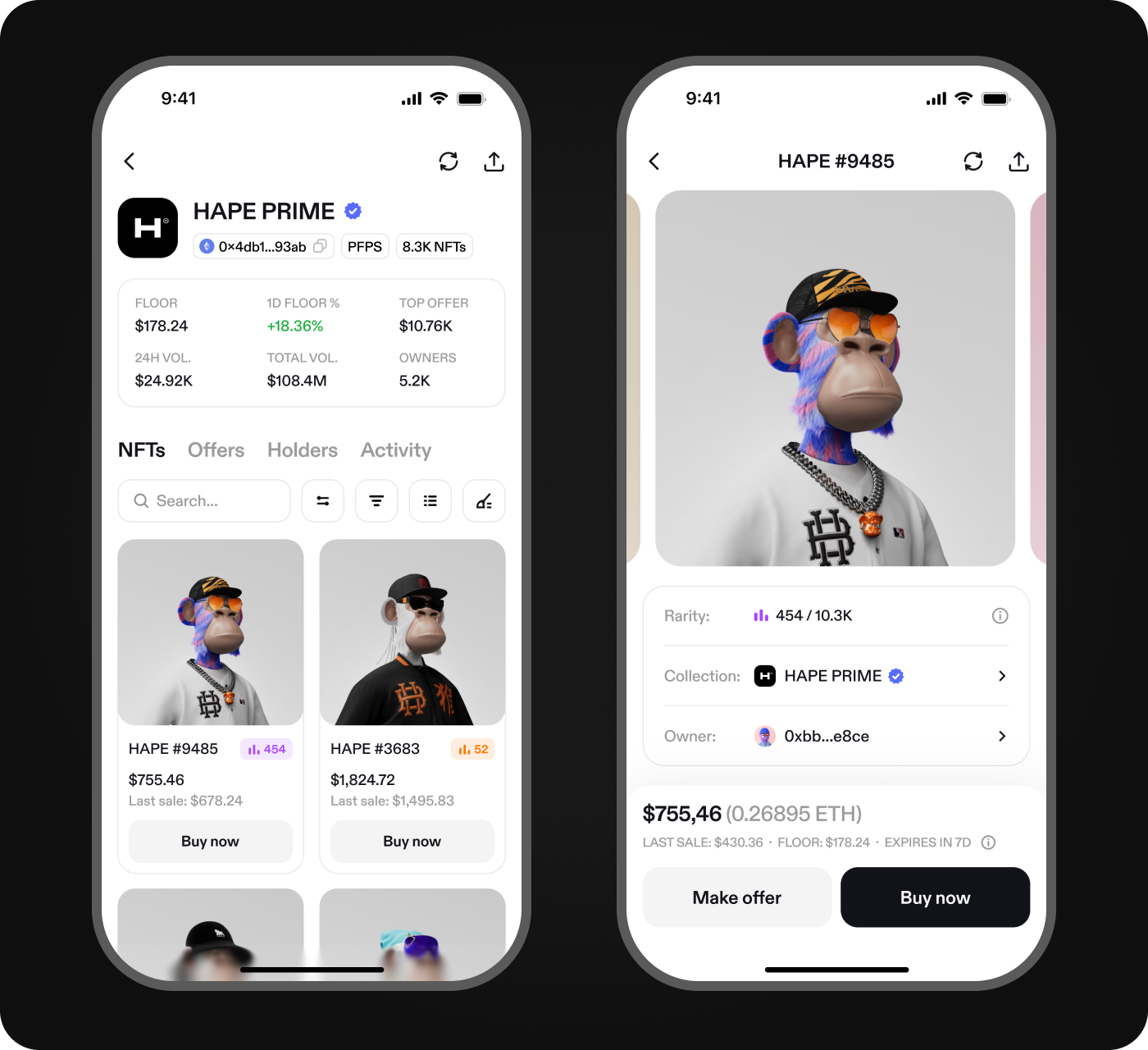
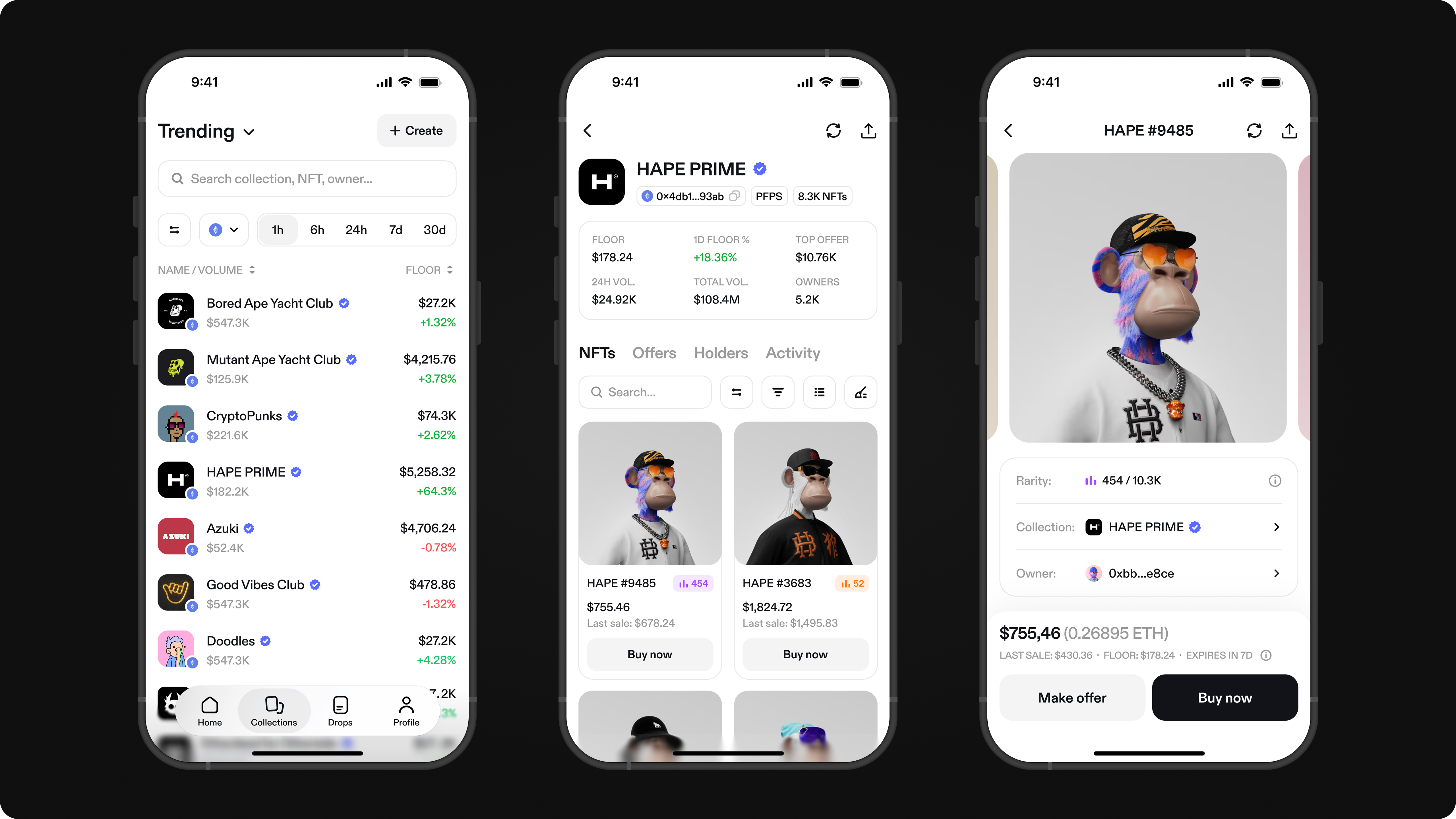
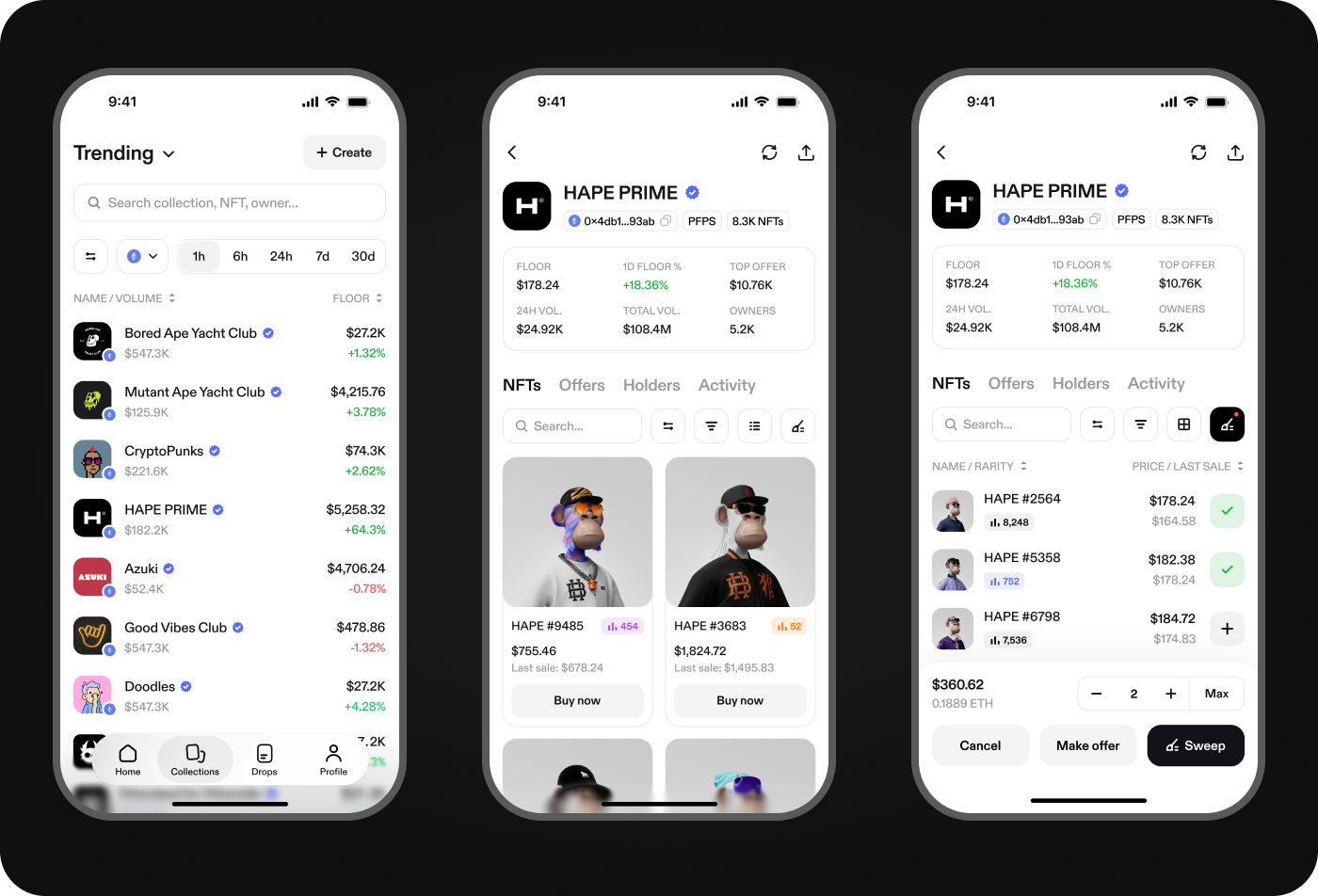
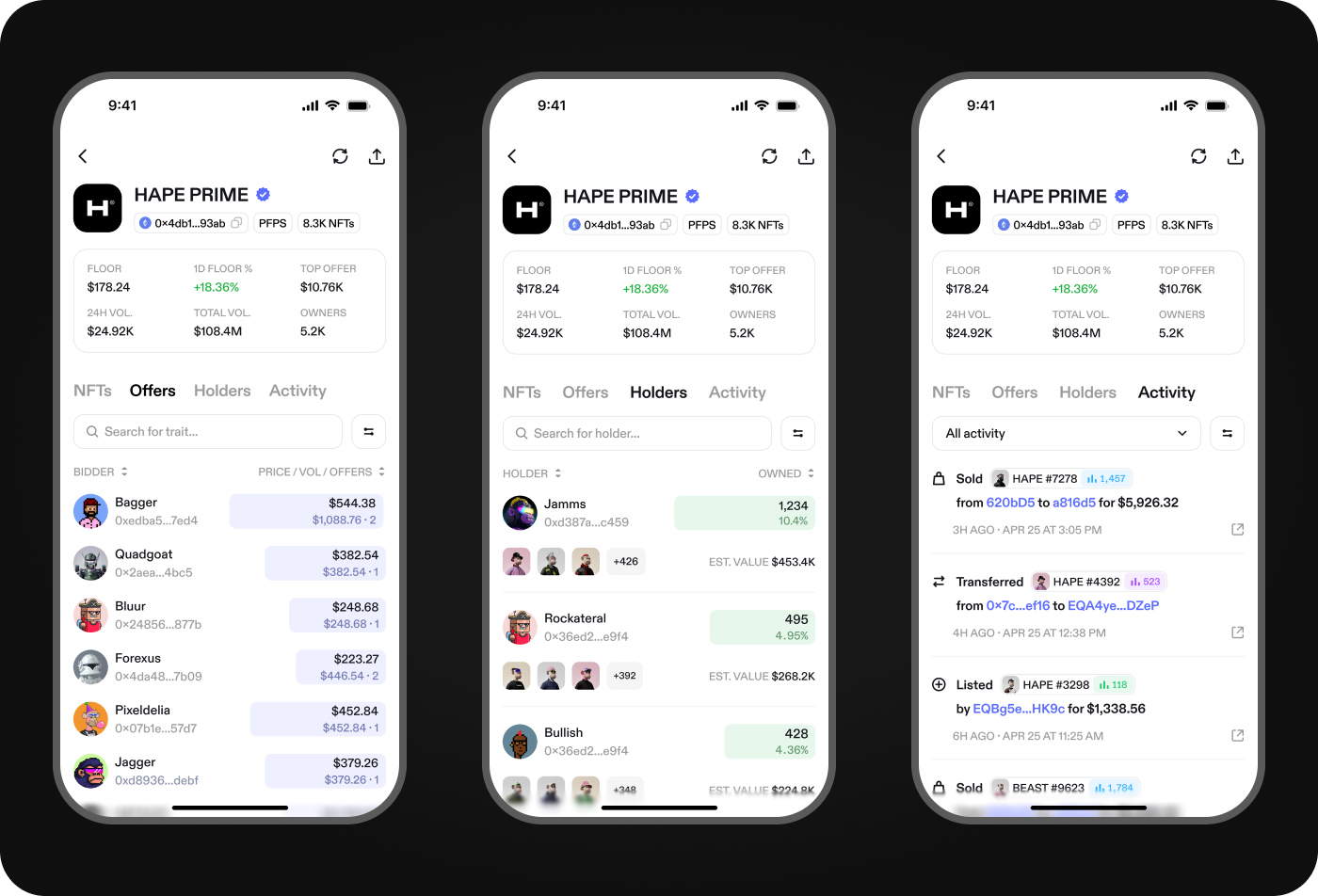
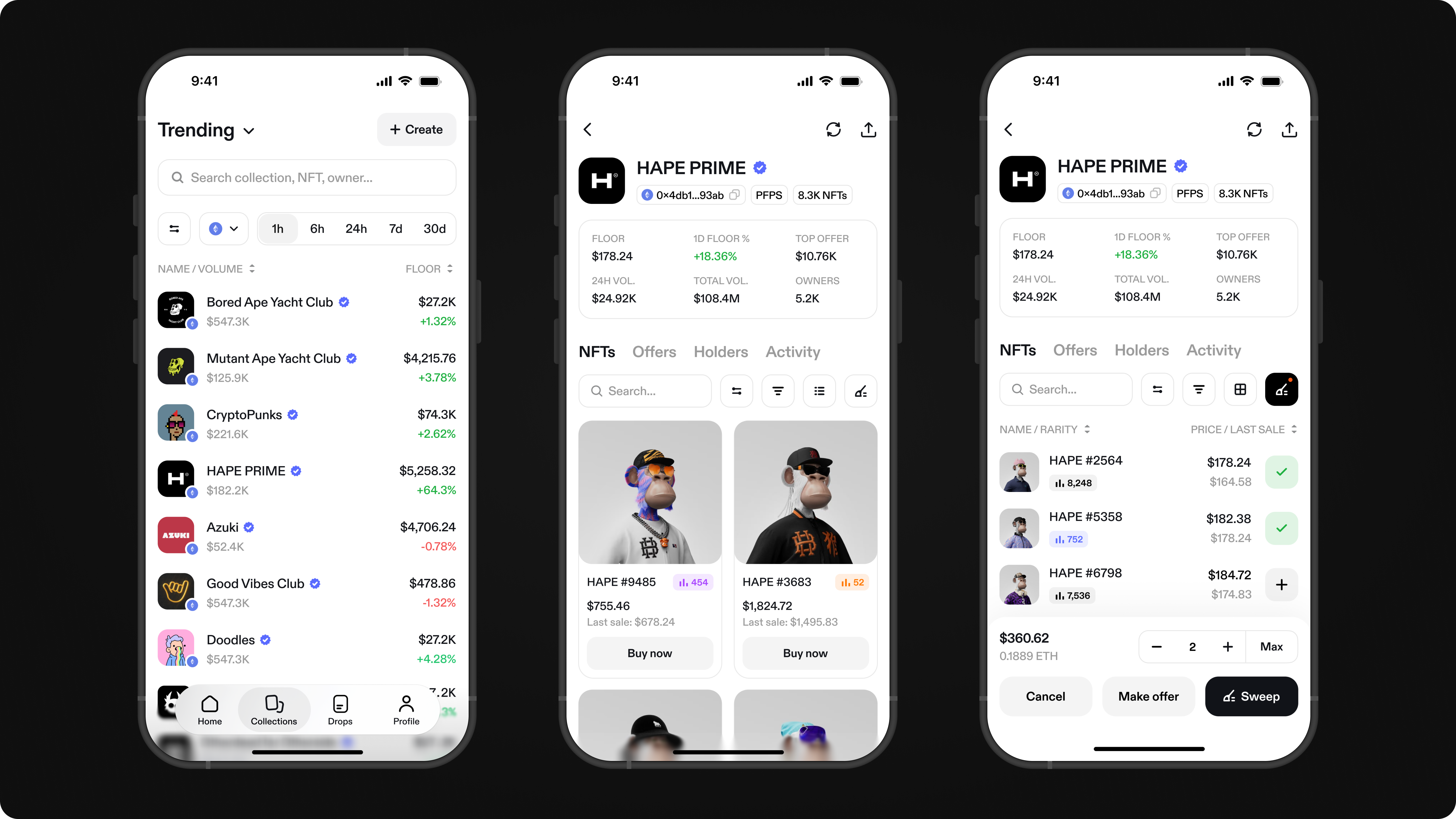
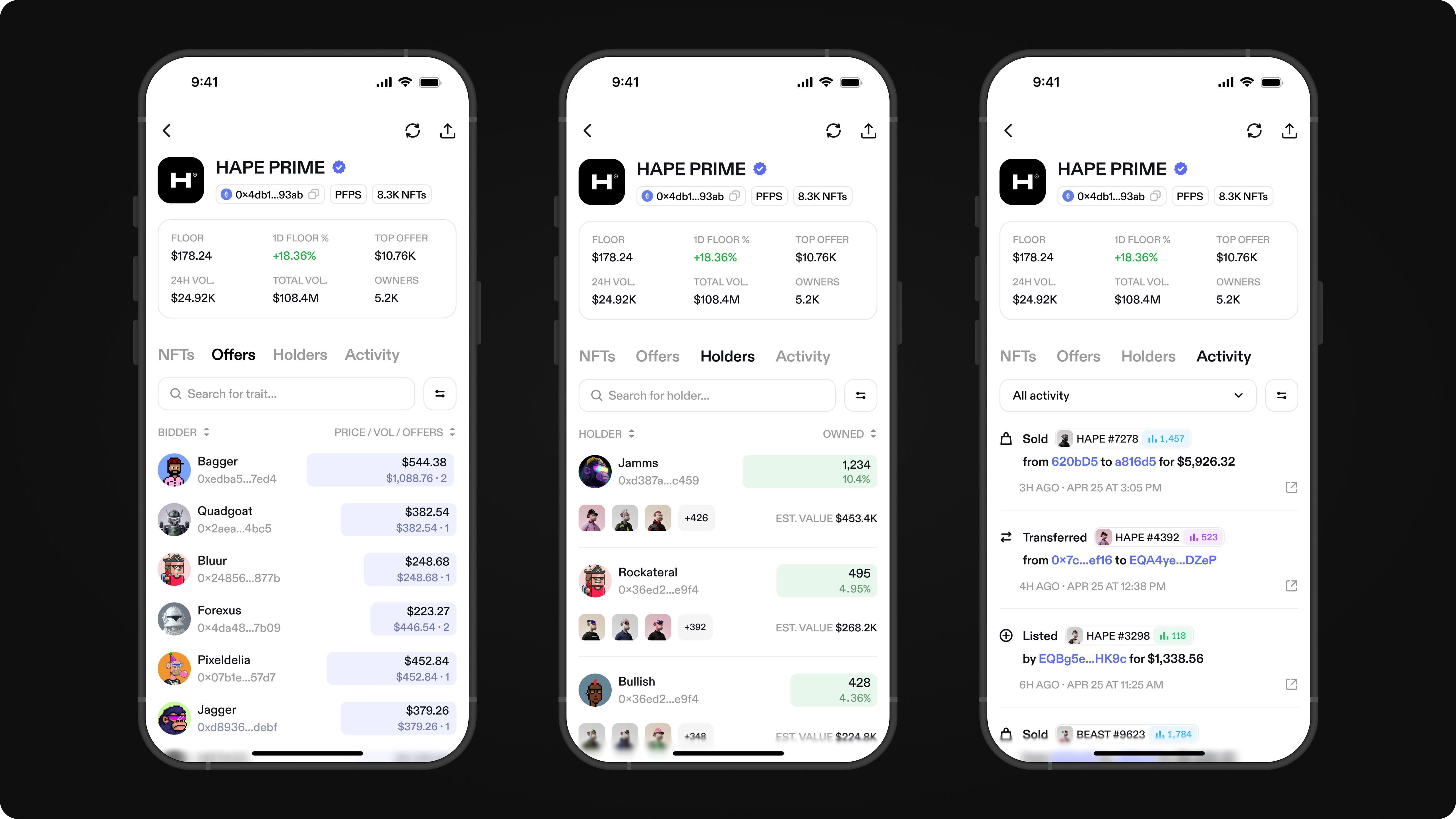
I designed one connected flow for discovering collections, reviewing key market data, and trading NFTs across networks. Users could compare collections using floor price, volume, offers, holders, and activity, then buy individual NFTs, make offers, or use Sweep to purchase multiple NFTs at once. They could move from comparing collections to completing a trade without switching between platforms.
SOLUTION 1
Create a clear path from discovery to trade
I designed one connected flow for discovering collections, reviewing key market
data, and trading NFTs across networks. Users could compare collections using
floor price, volume, offers, holders, and activity, then buy individual NFTs, make offers,
or use Sweep to purchase multiple NFTs at once. They could move from comparing
collections to completing a trade without switching between platforms.
Buy now or make an offer
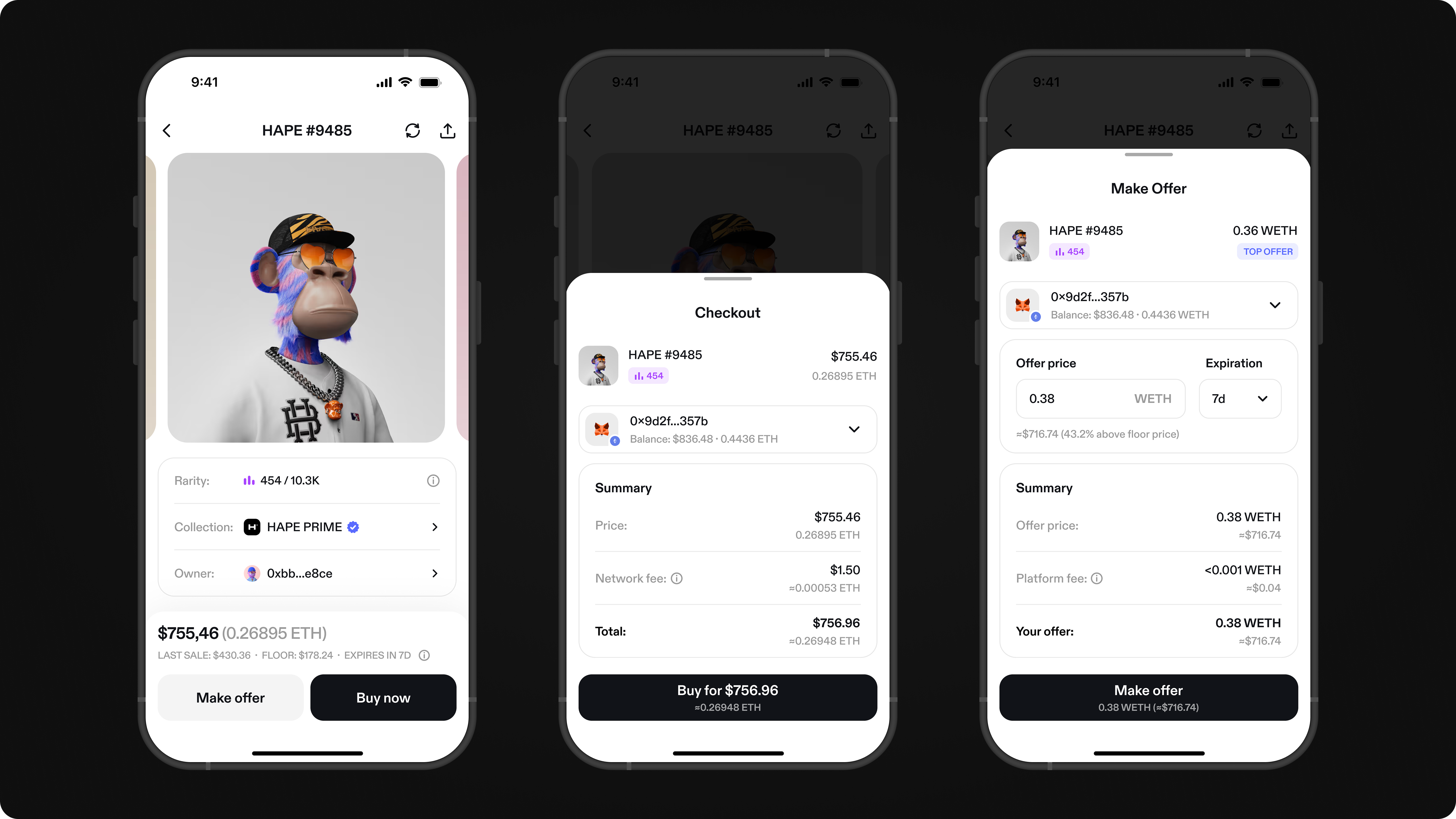
Users could buy an NFT at the listed price or make an offer and wait for the seller’s response. They could choose what mattered more: buying now or trying to get a better price. Before confirming, they saw the full cost, so there were no surprises at checkout.
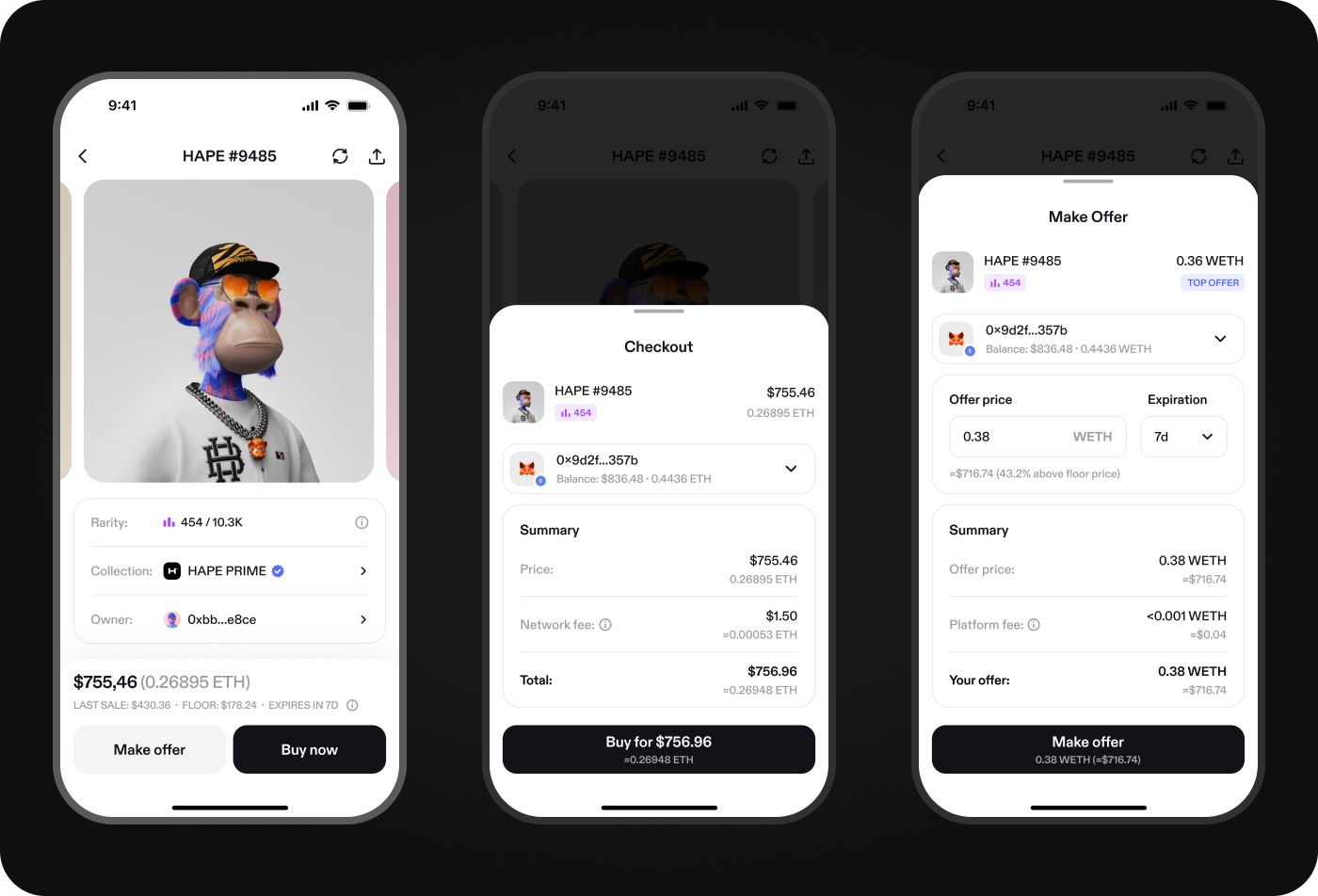
Buy now or make an offer
Users could buy an NFT at the listed price or make an offer and wait for
the seller’s response. They could choose what mattered more: buying now
or trying to get a better price. Before confirming, they saw the full cost,
so there were no surprises at checkout.
SOLUTION 2
Make creating and launching
NFT collections easier
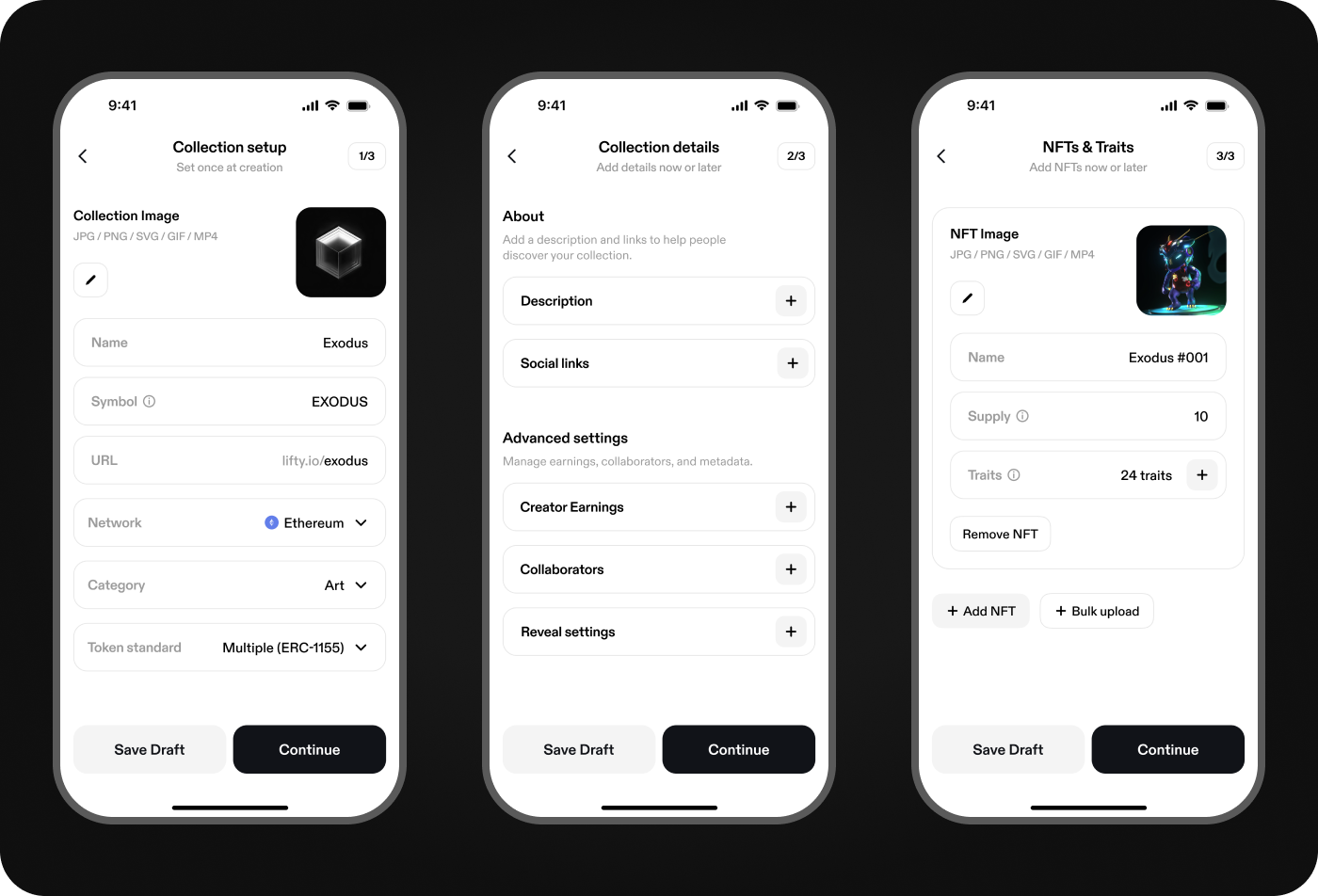
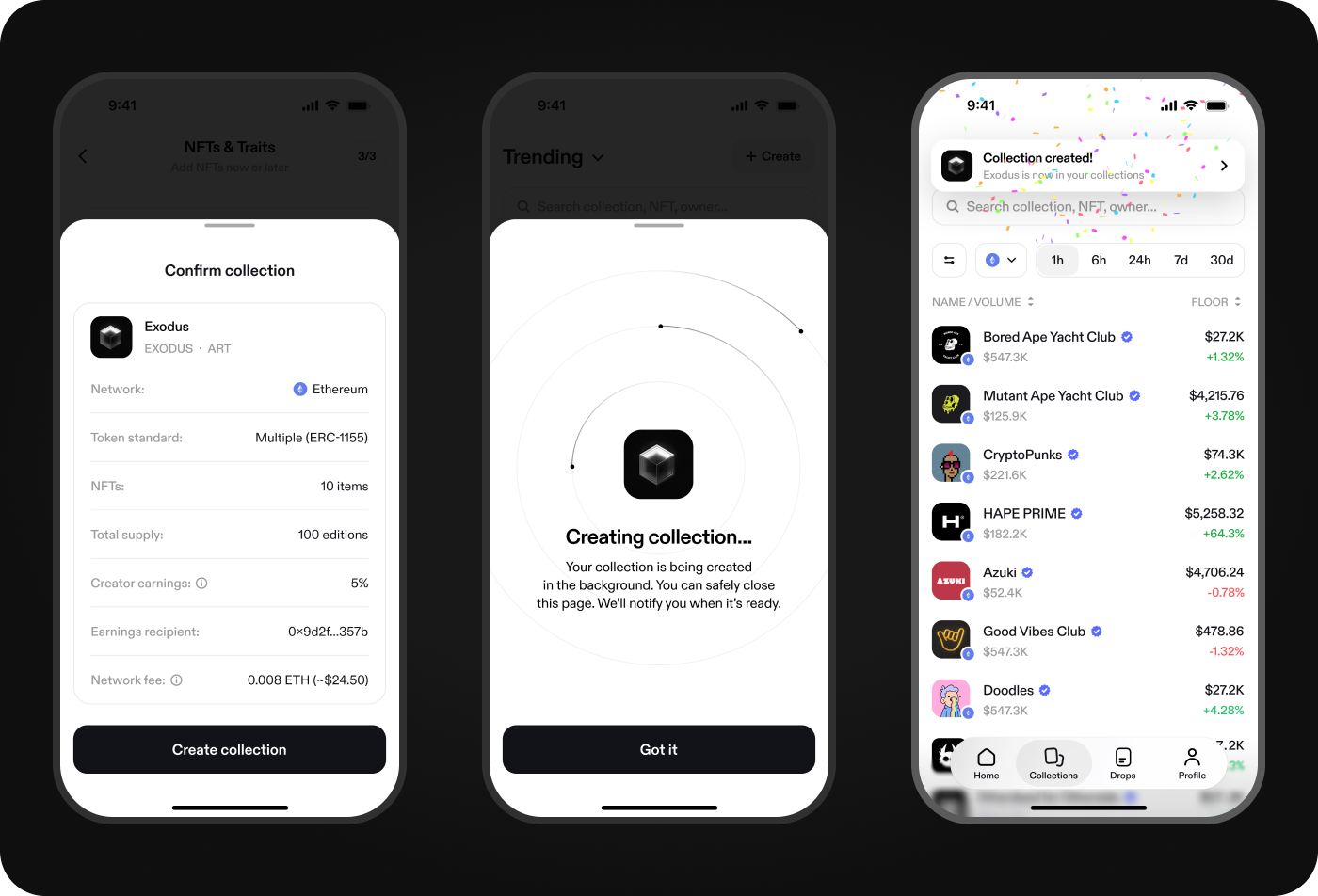
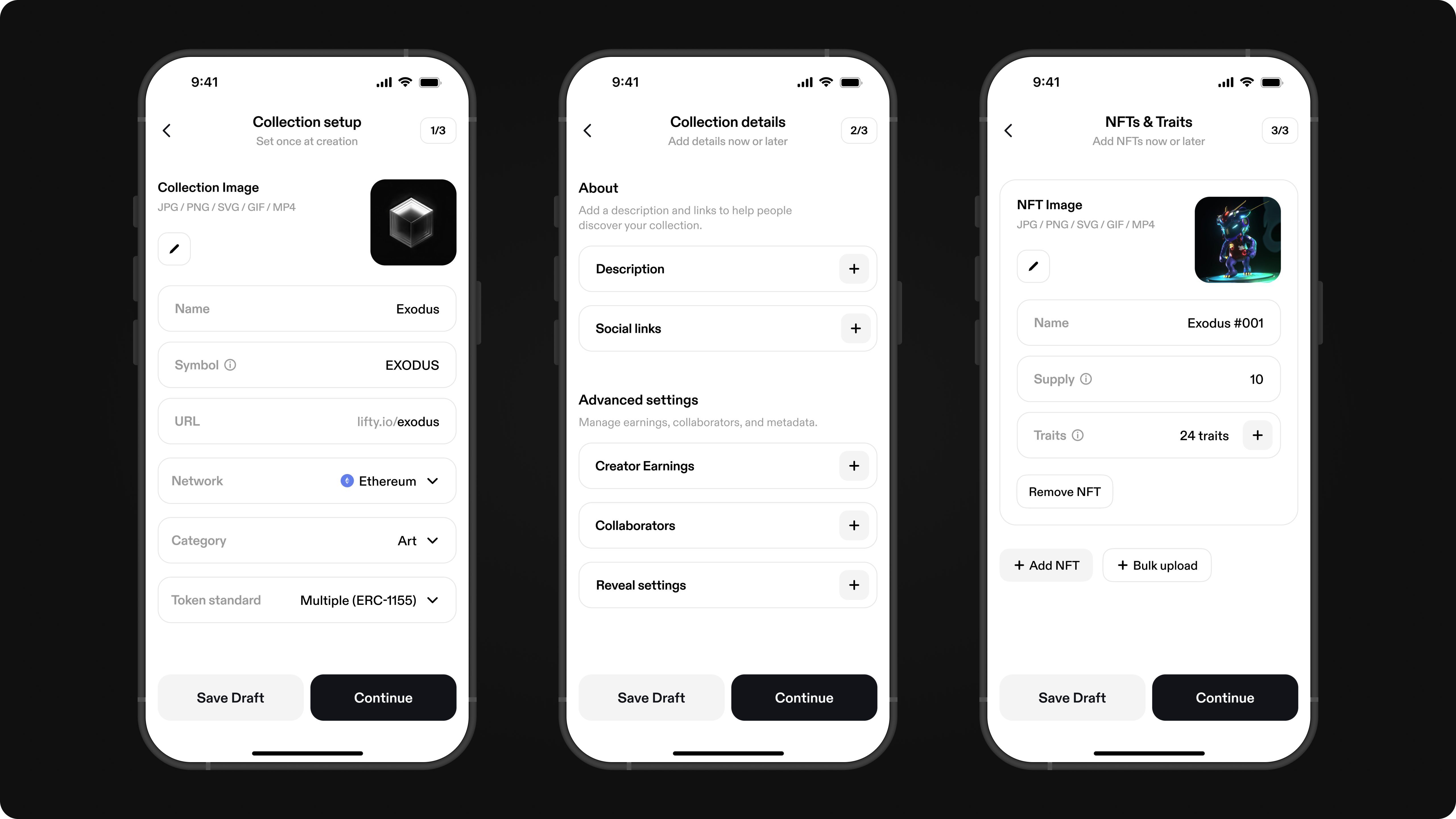
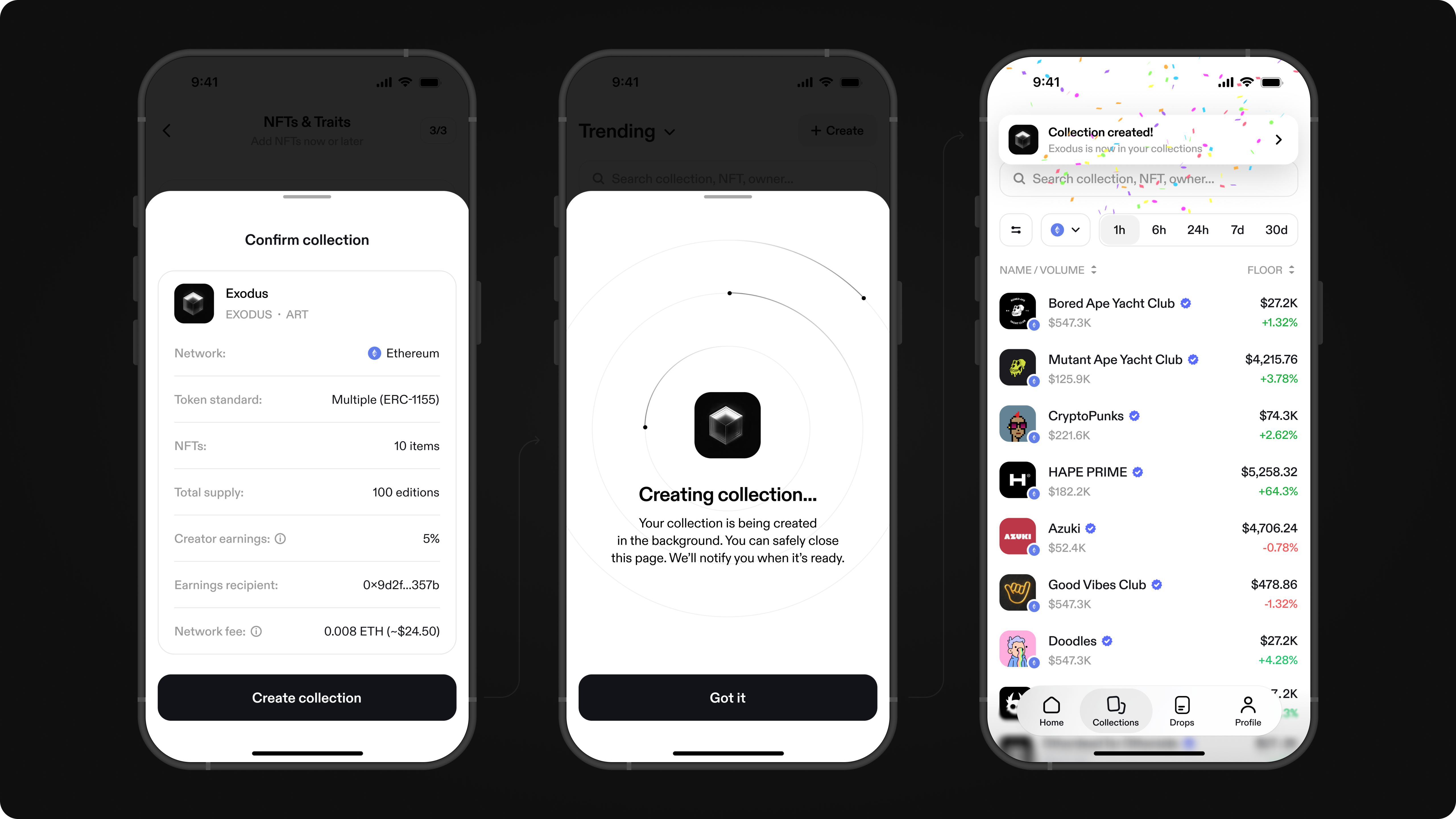
I designed a clear step-by-step flow that put the essential choices first and kept advanced settings optional. Creators could save their progress and review the collection details and network fee before launch. This made the setup easier to complete and reduced the risk of mistakes. For Lifty, every completed launch added new NFTs for users to discover and trade.
SOLUTION 2
Make creating and launching NFT collections easier
I designed a clear step-by-step flow that put the essential choices first and
kept advanced settings optional. Creators could save their progress and review
the collection details and network fee before launch. This made the setup easier
to complete and reduced the risk of mistakes. For Lifty, every completed launch
added new NFTs for users to discover and trade.
SOLUTION 3
Attract first buyers
to new NFT launches
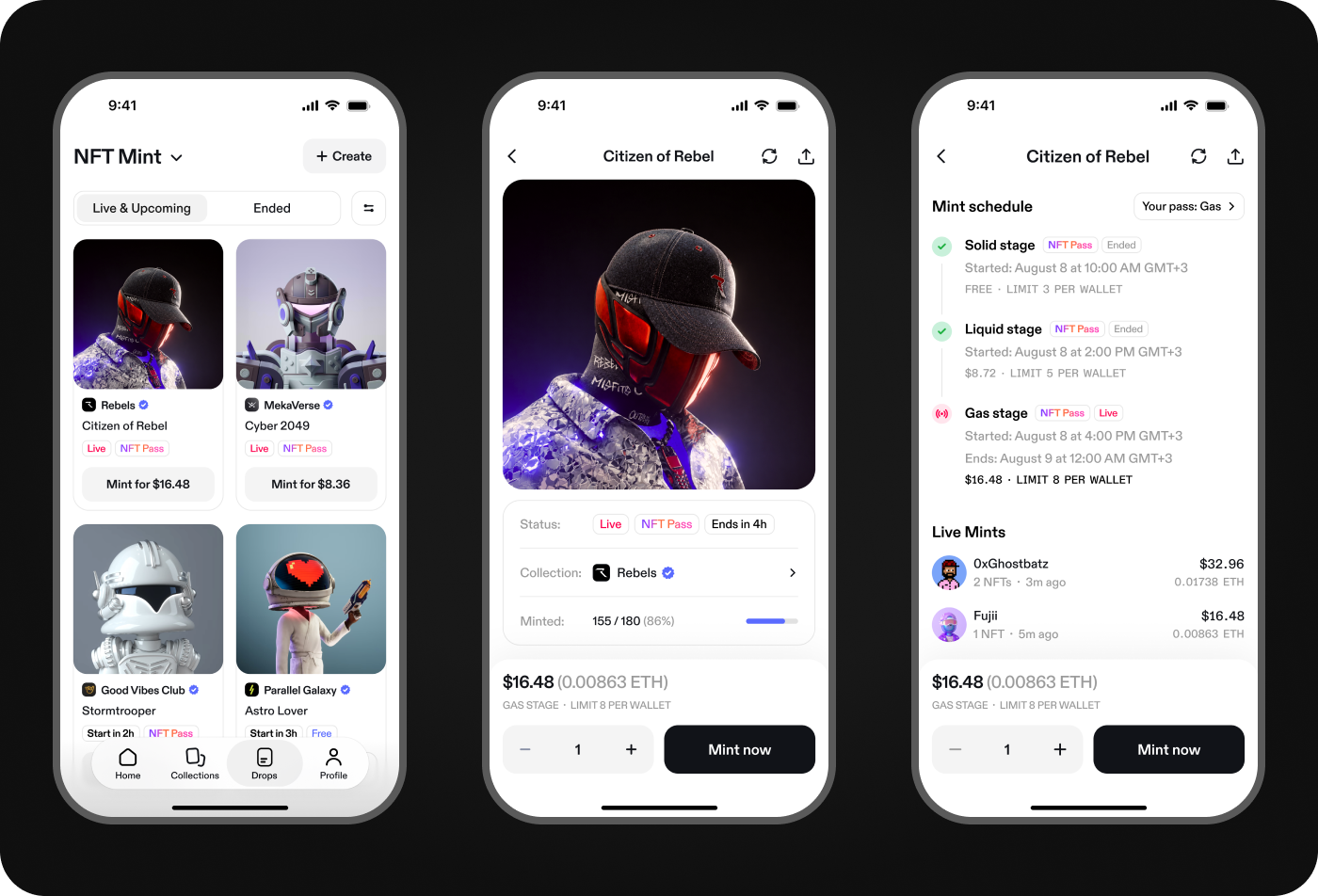
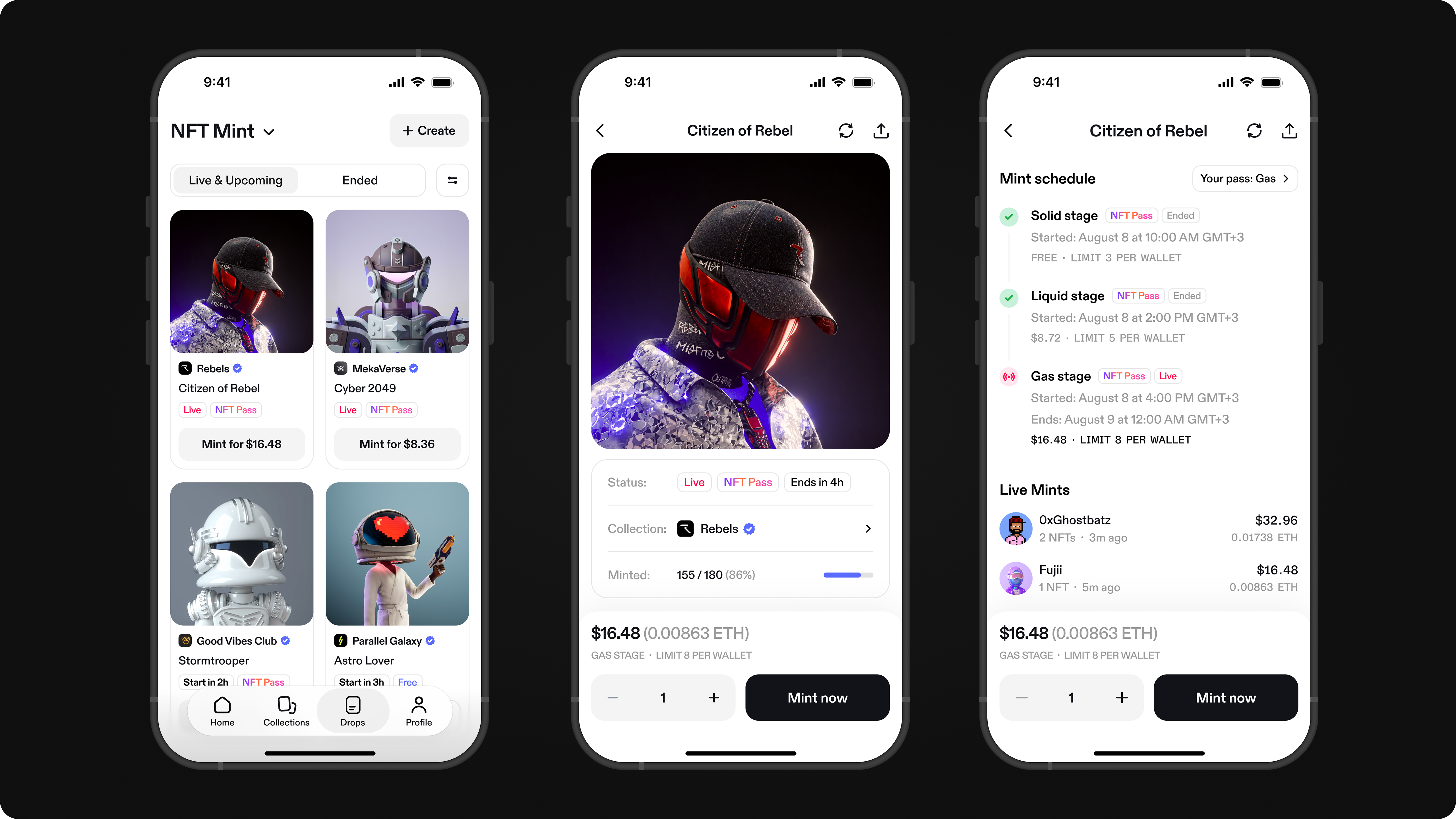
I designed Drops to help creators find their first buyers and give users a simple way to join new NFT launches. Each launch had stages with different access rules, prices, and purchase limits. This gave creators control over NFT distribution and helped users understand when they could participate. After launch, these NFTs became available for trading on Lifty, expanding the selection and supporting trading activity.
I also designed NFT Pass, an NFT users could buy to access exclusive Drops and exclusive participation terms. This gave the Pass ongoing value across future launches.
SOLUTION 3
Attract first buyers to new NFT launches
I designed Drops to help creators find their first buyers and give users a simple
way to join new NFT launches. Each launch had stages with different access rules,
prices, and purchase limits. This gave creators control over NFT distribution and
helped users understand when they could participate. After launch, these NFTs
became available for trading on Lifty, expanding the selection and supporting
trading activity.
I also designed NFT Pass, an NFT users could buy to access exclusive Drops
and exclusive participation terms. This gave the Pass ongoing value across
future launches.
SOLUTION 4
Manage NFTs and tokens
for trading in one place
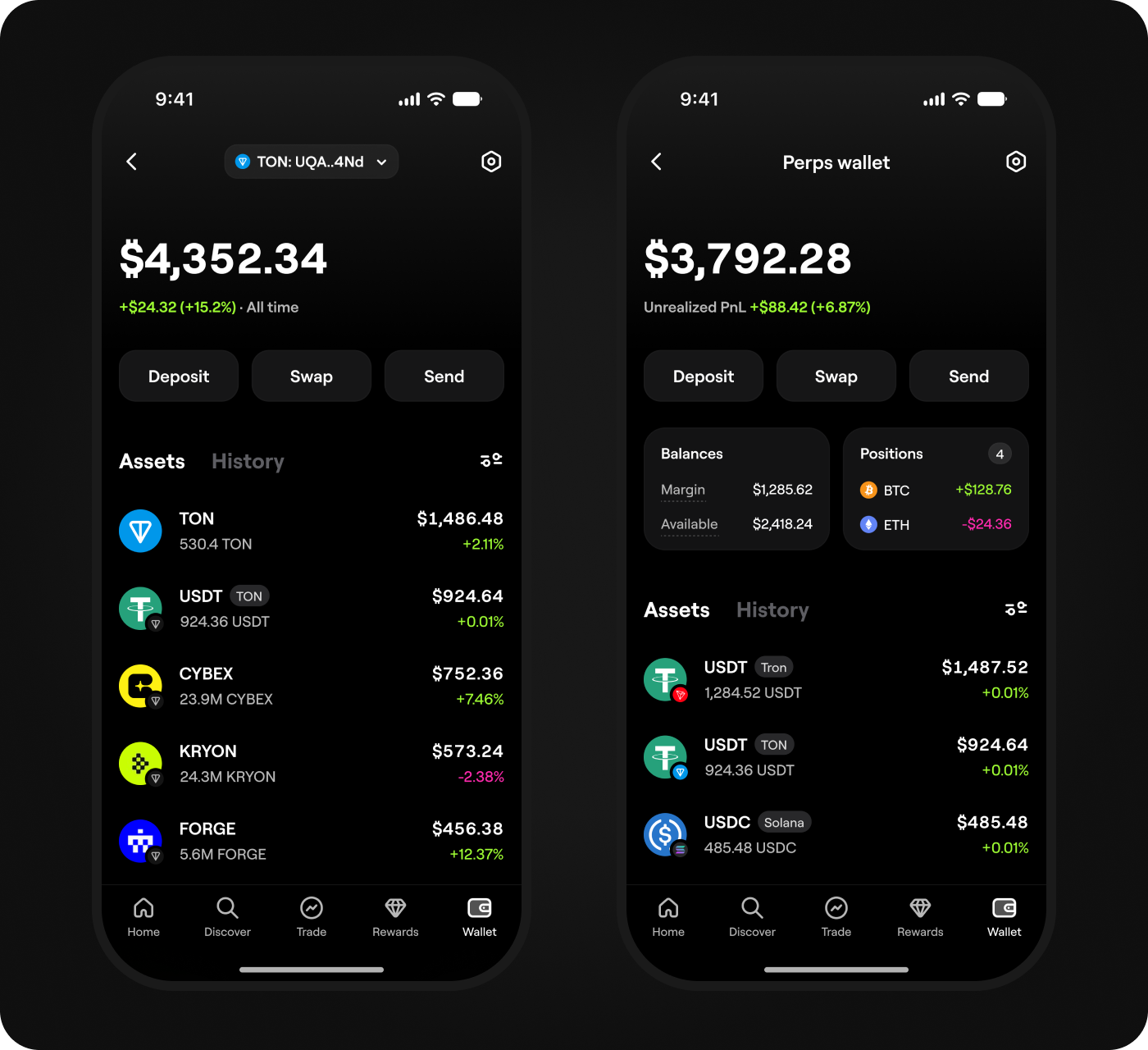
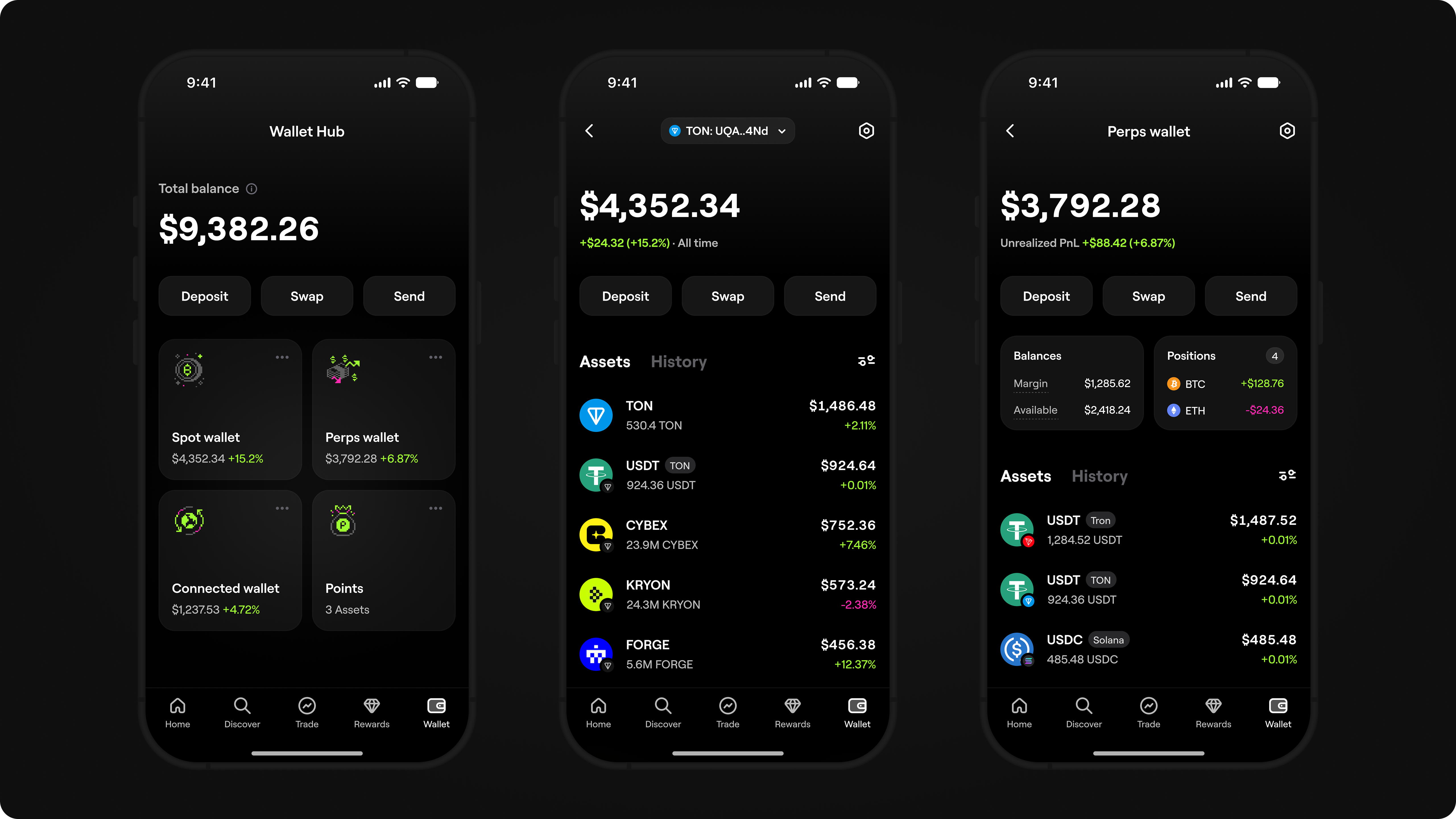
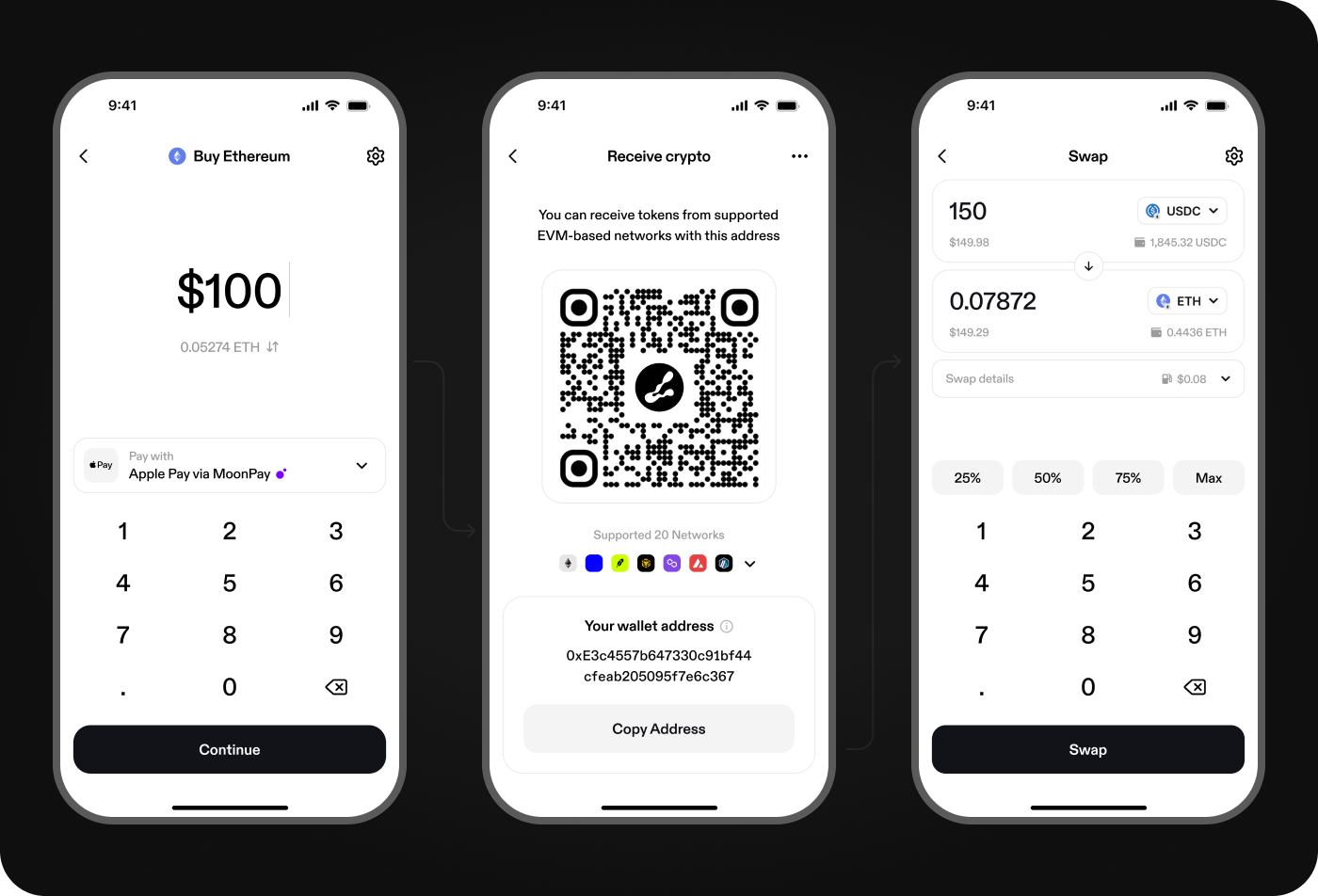
I designed asset management inside the user profile. Users could see their NFT and token balances, buy or receive tokens, swap them, send assets, and track transactions. Together, these flows supported the full NFT trading cycle across networks, from preparing assets before a purchase to managing NFTs and tokens afterward.
Manage assets
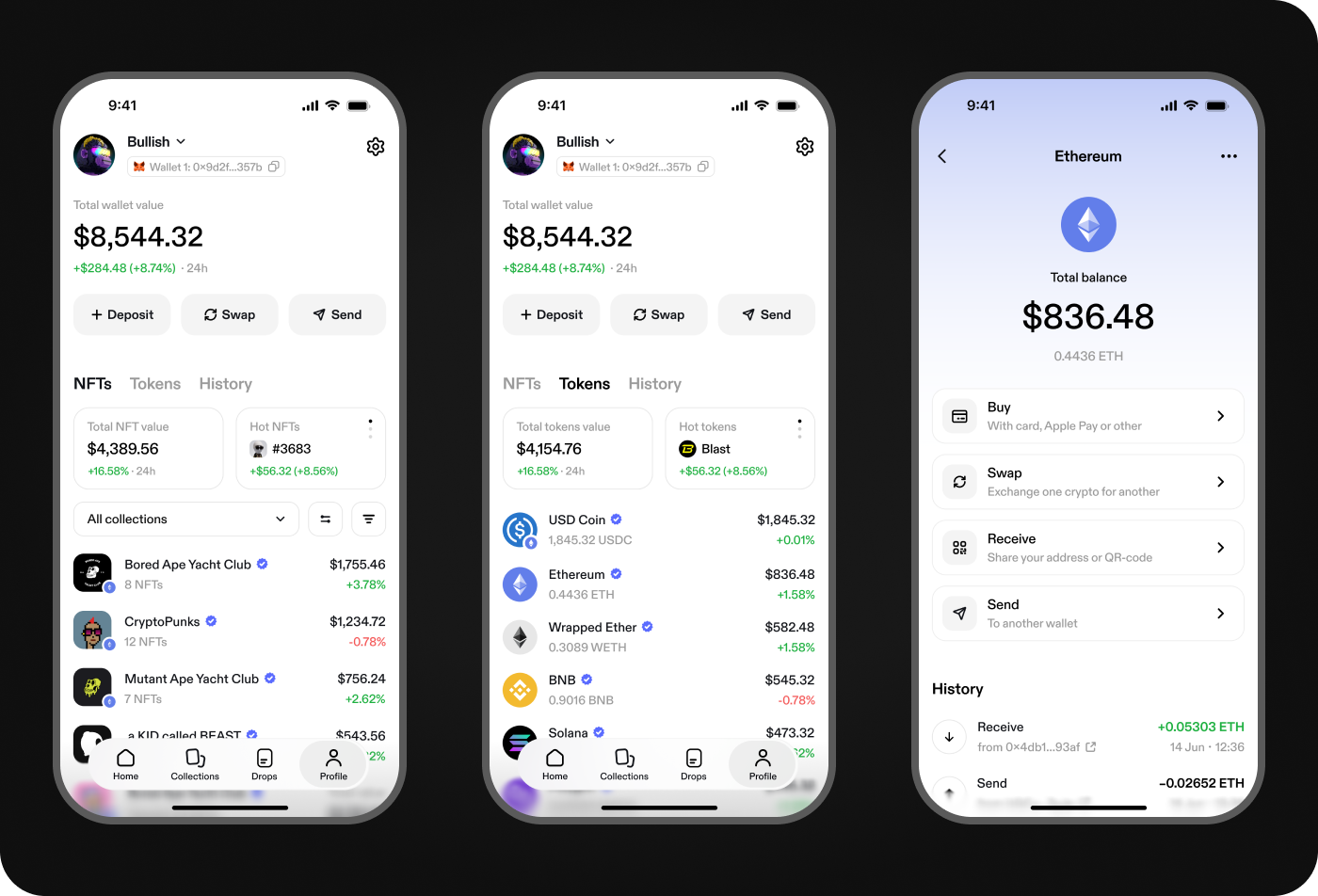
Buy, receive, and swap crypto
SOLUTION 4
Manage NFTs and tokens for trading in one place
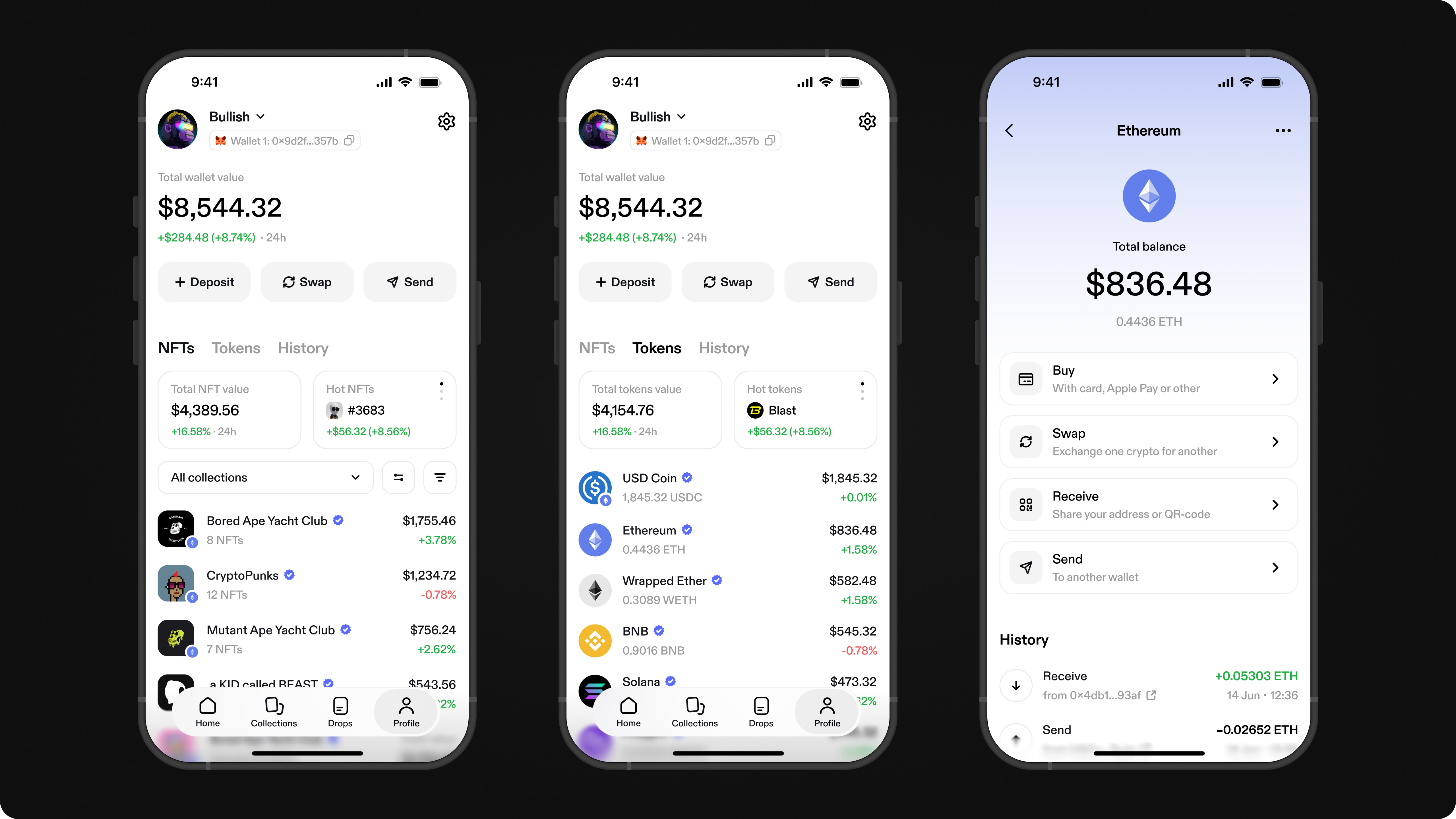
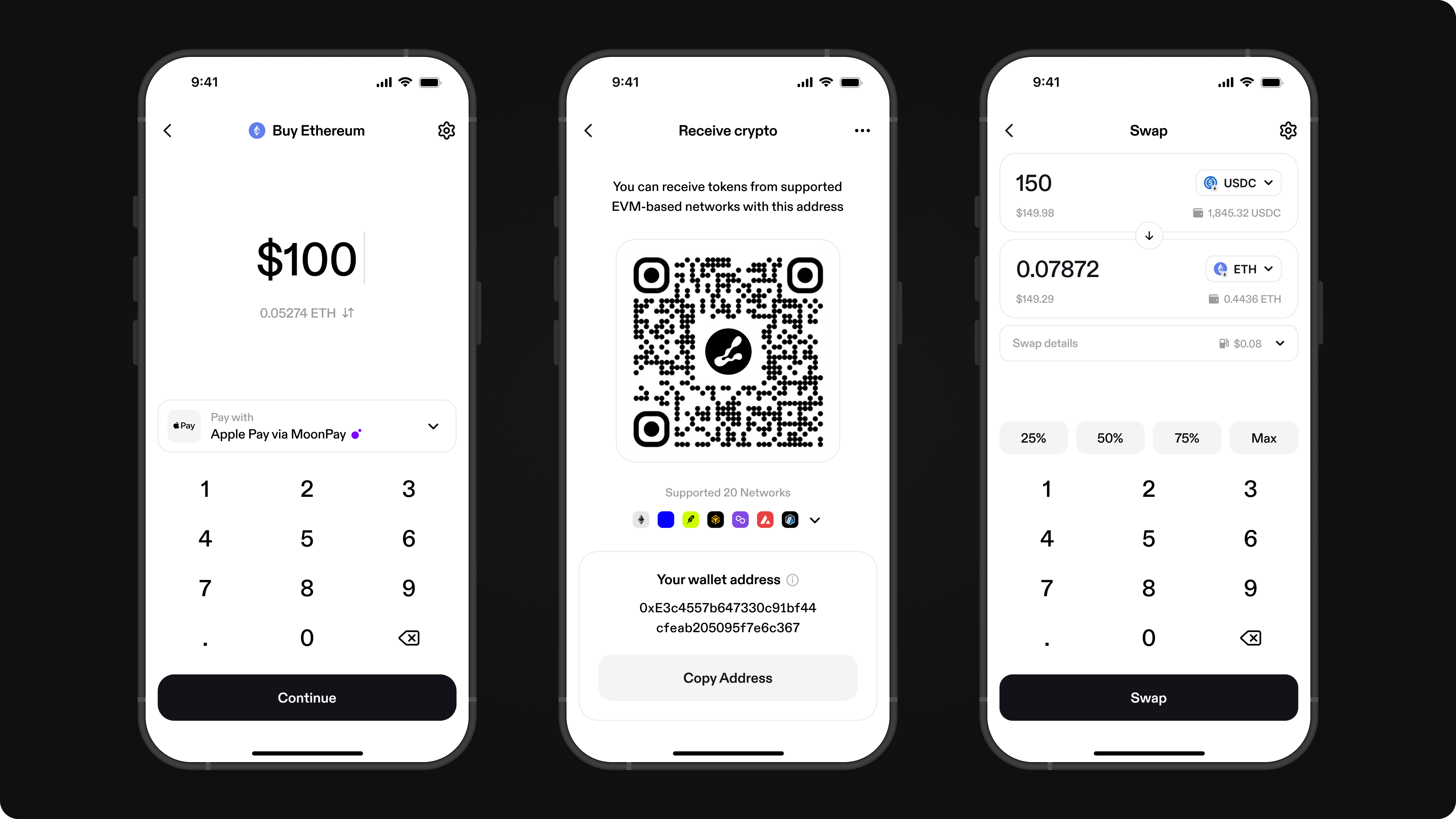
I designed asset management inside the user profile. Users could see their
NFT and token balances, buy or receive tokens, swap them, send assets, and
track transactions. Together, these flows supported the full NFT trading cycle
across networks, from preparing assets before a purchase to managing NFTs
and tokens afterward.
Manage assets
Buy, receive, and swap crypto
UX testing and iteration
I used usability tests and design reviews with the team to find unclear steps and edge cases before release. After launch, I combined product analytics and funnel data with user feedback to understand where users dropped off and what caused friction. I used these findings to guide the next product iterations.
Results
I designed NFT Trading, Launchpad, Drops, and asset management as one product. Creators could launch collections and attract their first buyers, while users could discover and trade NFTs across networks and manage the assets needed for trading.
1.3M+
Monthly active users at its peak
$276M+
Total trading volume
354K+
NFTs created
#1 NFT marketplace
On BNB Chain by trading volume
Key Learning
Making an action available is not the same as helping someone decide to take it. Before buying an NFT, users needed market context, the full cost, and the right assets. Before launching a collection, creators needed clear settings and control over distribution. Before joining a Drop, users needed to understand access rules, price, and limits. This changed the design focus: every flow had to make a decision clear before asking someone to act.
UX testing and iteration
I used usability tests and design reviews with the team to find unclear steps and
edge cases before release. After launch, I combined product analytics and funnel
data with user feedback to understand where users dropped off and what caused
friction. I used these findings to guide the next product iterations.
Results
I designed NFT Trading, Launchpad, Drops, and asset management as one product.
Creators could launch collections and attract their first buyers, while users could
discover and trade NFTs across networks and manage the assets needed for trading.
1.3M+
Monthly active users at its peak
$276M+
Total trading volume
354K+
NFTs created
#1 NFT marketplace
On BNB Chain by trading volume
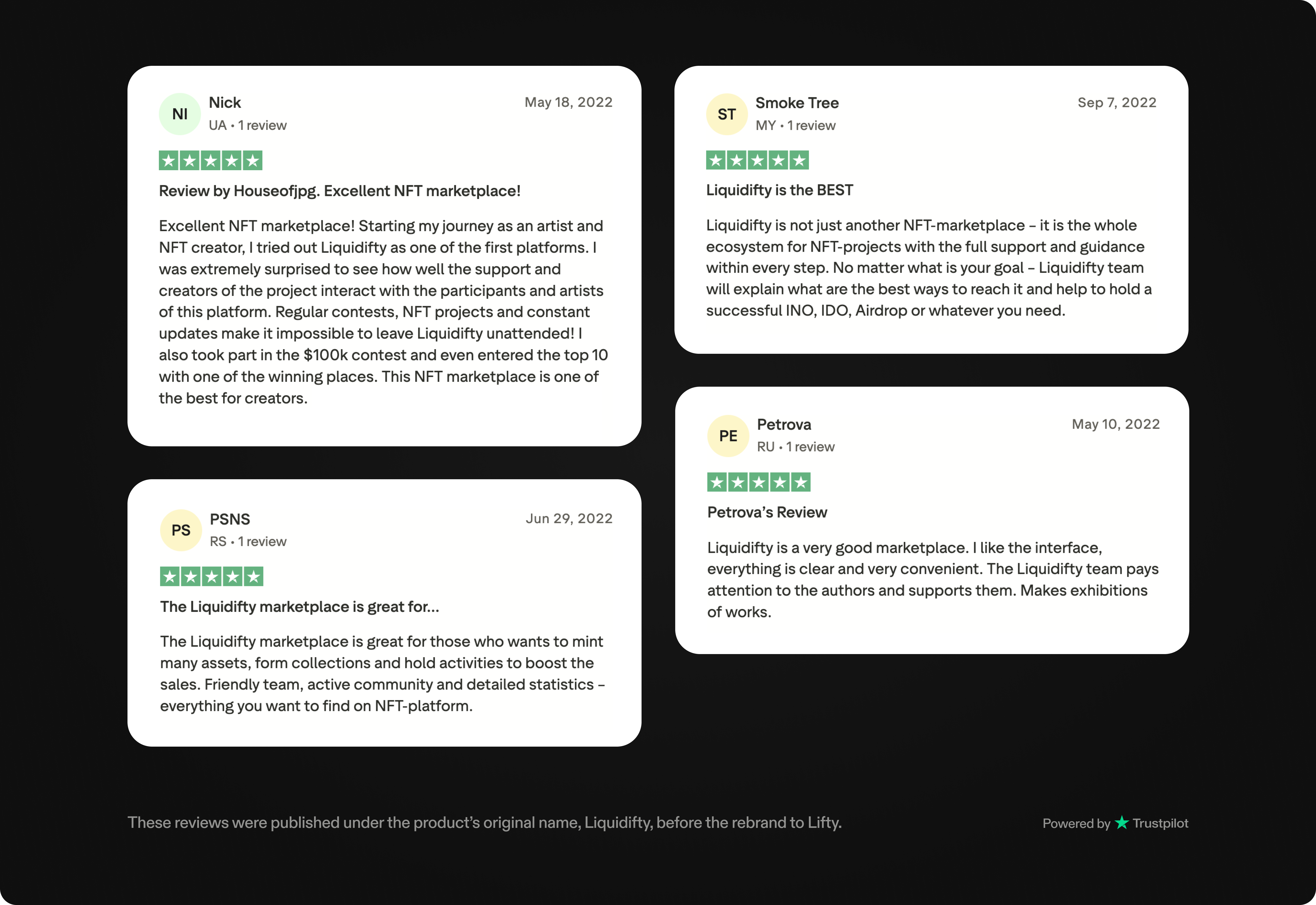
What users said
Key Learning
Making an action available is not the same as helping someone decide to take it.
Before buying an NFT, users needed market context, the full cost, and the right
assets. Before launching a collection, creators needed clear settings and control over
distribution. Before joining a Drop, users needed to understand access rules, price,
and limits. This changed the design focus: every flow had to make a decision clear
before asking someone to act.