Blum
BlumDesigned trading wallets, halving
the steps needed to buy and sell
and increasing trades by 30%
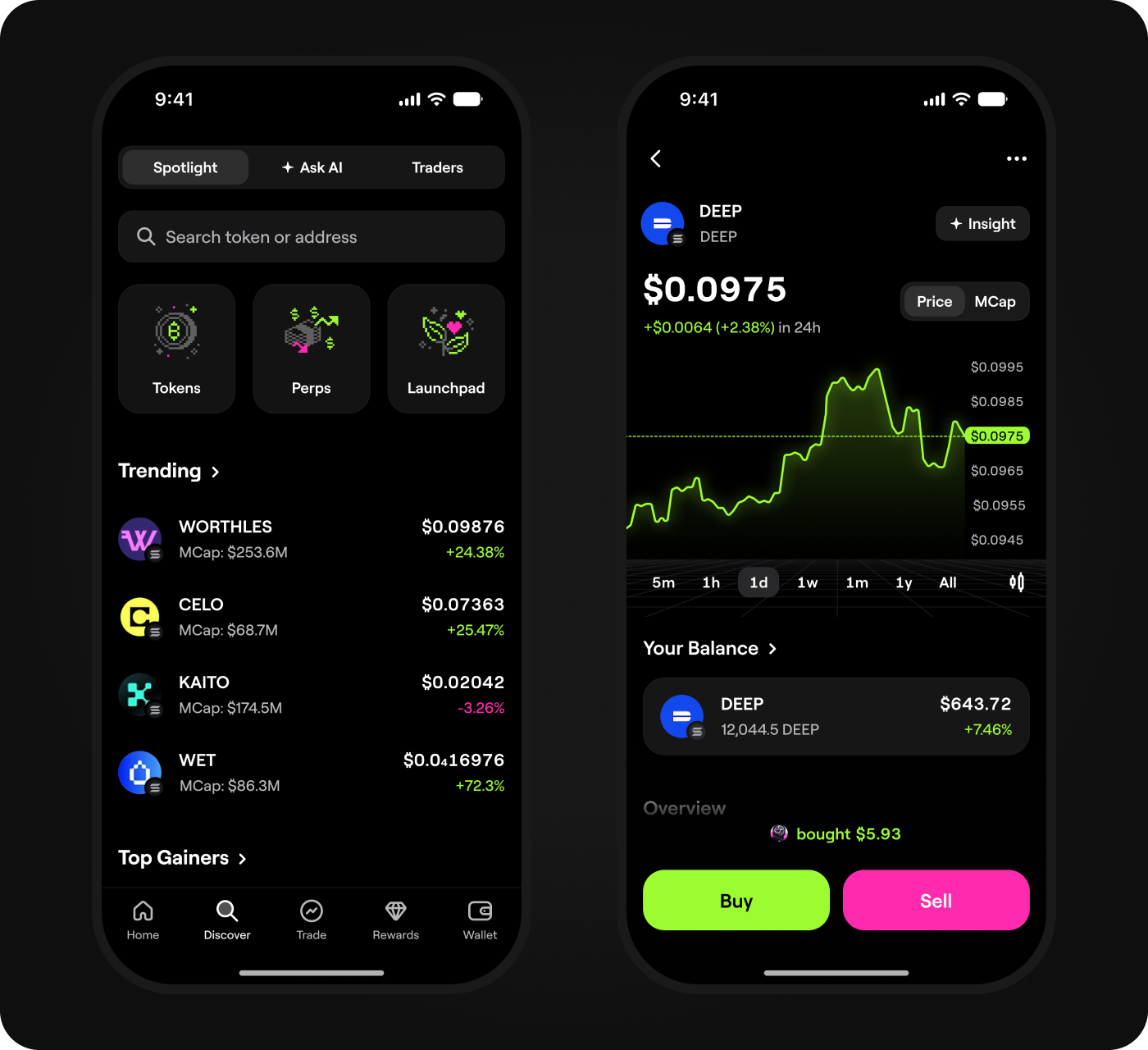
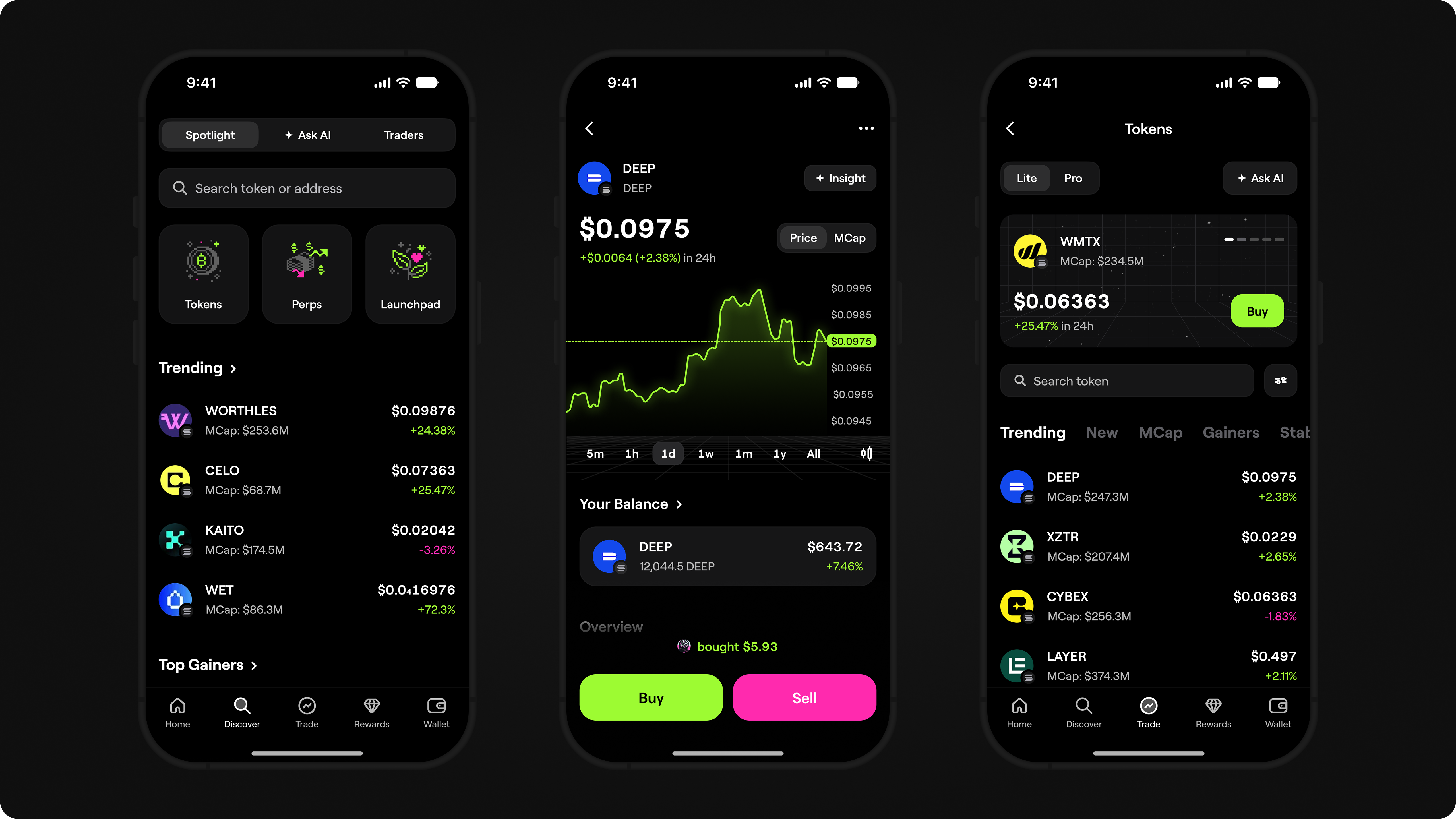
Blum is a crypto trading app with 95M+ users. I led the end-to-end design of self-custody wallets for Spot and Perps, enabling users to trade directly from their in-app balance while making deposits, sending funds, and wallet management clear and easy to control.
 Blum
BlumDesigned trading wallets, halving the steps needed to buy and sell and increasing trades
by 30%
Blum is a crypto trading app with 95M+ users. I led the end-to-end design of self-custody wallets for Spot and Perps, enabling users to trade directly from their in-app balance while making deposits, sending funds, and wallet management clear and easy to control.
Context
Initially, Blum trading relied on a connected external TON Wallet. Users kept their
funds there and confirmed trades through it. This worked for the early product.
But as Blum expanded into Spot Trading, Perpetual Trading, and multiple networks,
the product needed dedicated self-custody wallets inside Blum to make trading
faster, deposits and sending funds clearer, and wallet management easier to control.
Problem
For the business: The connected wallet became a bottleneck in the trading funnel.
Every Spot trade required an external wallet confirmation, adding steps between the
user’s intent to buy or sell and the completed trade. This created drop-off and limited
trading activity. The connected wallet also became a limitation for Perpetual Trading,
where users needed a separate wallet to open and manage positions.
For users: Users wanted to buy or sell tokens quickly, especially when prices were
moving. Instead, every trade sent them to an external wallet for confirmation, after
which they had to return to Blum and wait for the result. Some users explicitly said
that this confirmation flow got in the way of trading.
Goal
Build dedicated self-custody wallets for Spot and Perps that let users deposit funds,
complete Spot trades inside Blum without confirming each trade in a connected
wallet, and manage Perps balances for leveraged trading.
Design deposit, transfer, send, backup, import, reset, and passcode flows to remain
clear, safe, and easy to control, especially when users move funds or change sensitive
wallet settings.
My role
I led the end-to-end design of the self-custody wallet experience across Wallet Hub,
Spot and Perps wallets, deposit, transfer, and send flows, transaction states, wallet
creation, import, backup, reset, and passcode protection. I built the UX architecture,
core flow logic, interaction patterns, safety states, and handoff for the full wallet
experience.
Strategy
The core decision was to design dedicated self-custody wallets for Spot and Perps
trading. Instead of relying on an external wallet to confirm every Spot trade, the new
wallet system needed to support Spot trade execution, Perps balances, deposits,
transfers, and sending funds, along with wallet safety flows inside Blum.
1. Create a dedicated self-custody
Spot wallet for faster buy and sell flows
Enable users to buy and sell tokens inside Blum without connected wallet
confirmation for every trade.
2. Simplify deposits and
make sending safer
Allow users to deposit quickly while protecting outgoing
transfers with clear review details and passcode protection.
3. Build a dedicated Perps wallet
for Perpetual Trading
Create a separate Perps wallet because connected external wallets
and the Spot wallet were not suitable for managing Perps balances
and leveraged positions.
4. Design wallet management
and safety flows
Give users control over self-custody wallet access and sensitive
operations through backup, import, reset, and passcode protection.
Success criteria
⁕ Reduce time to complete buy and sell flows⁕ Reduce the time needed to complete buy and sell flows
⁕ Increase completed Spot trades
⁕ Drive Spot and Perps wallet adoption⁕ Drive adoption of internal Spot and Perps wallets
⁕ Reduce wallet-related support tickets
⁕ Reduce TTM for new trading wallet features⁕ Reduce time to market for new wallet features
I evaluated the wallet architecture after 1,000+ sessions and 500+ completed
scenarios across Spot and Perps, including deposits, withdrawals, Spot trades,
and Perps wallet setup. I focused on metrics that showed speed, completion,
trading activity, wallet adoption, support load, and delivery speed.
SOLUTION 1
Removed external confirmation
from Spot trading
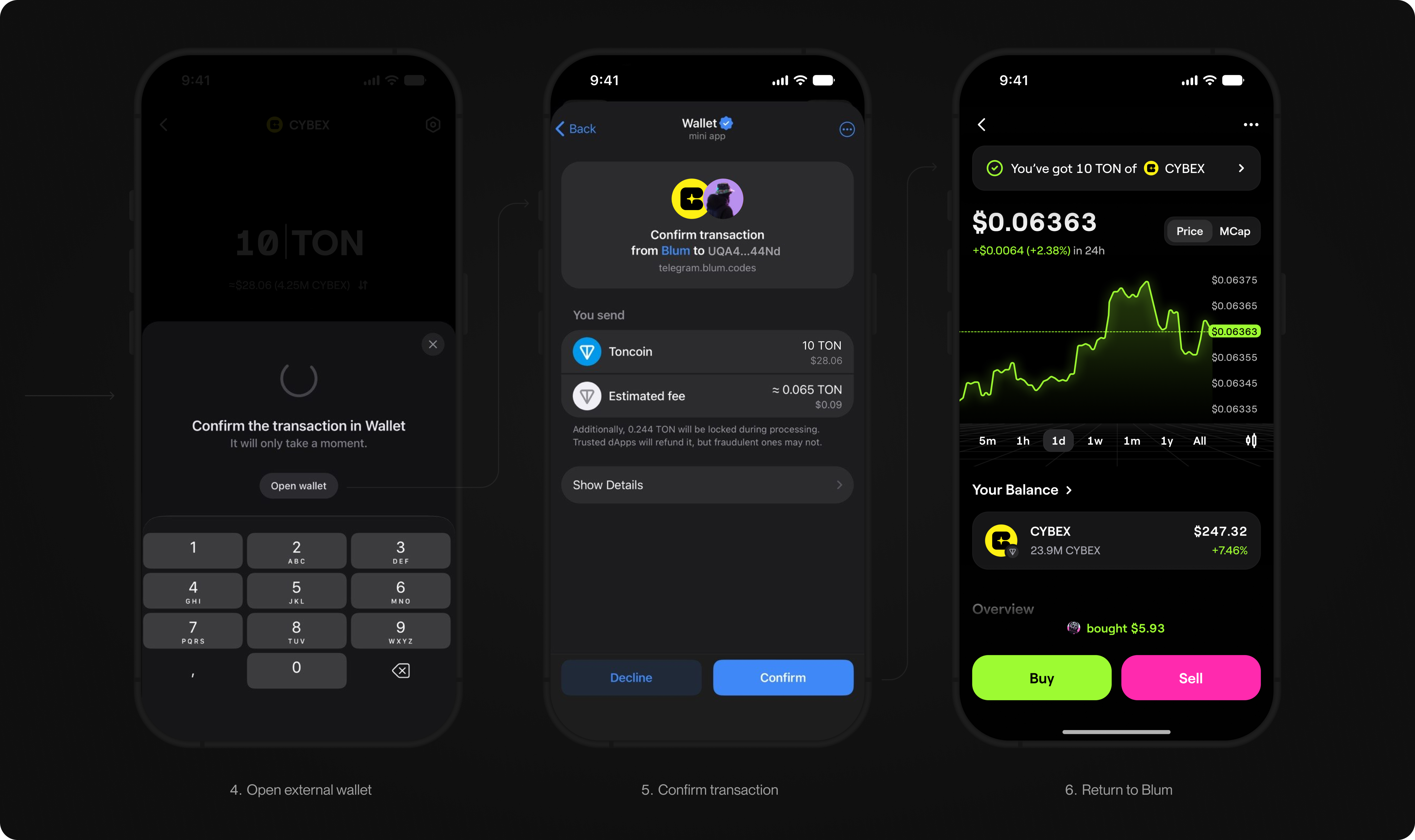
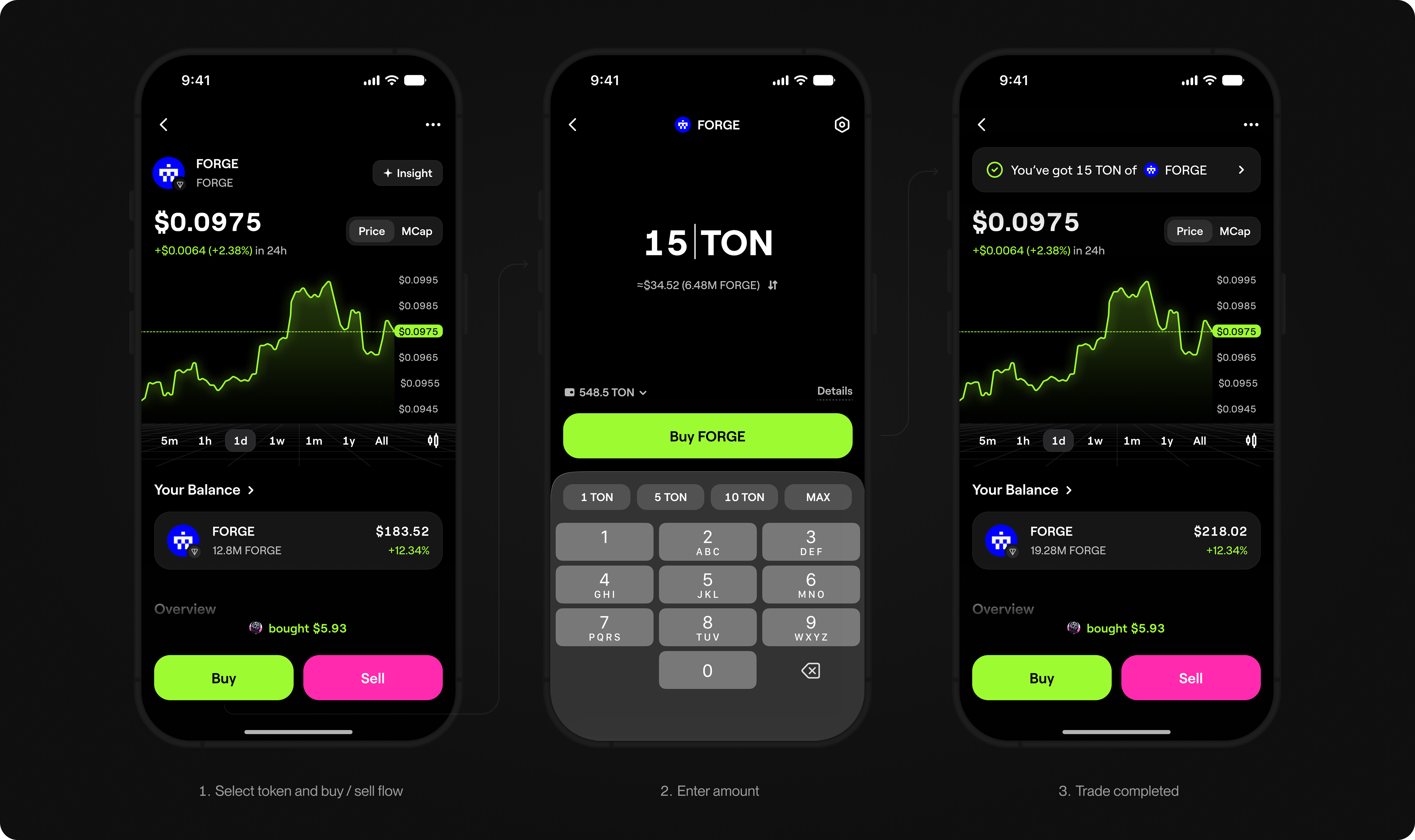
I changed the Spot buy and sell flow from external wallet confirmation to balance-based execution through a dedicated self-custody Spot Wallet. Users could deposit into their Spot Wallet once, then buy or sell tokens directly from their available balance. This removed connected wallet confirmation from every trade and reduced the flow from six steps to three.
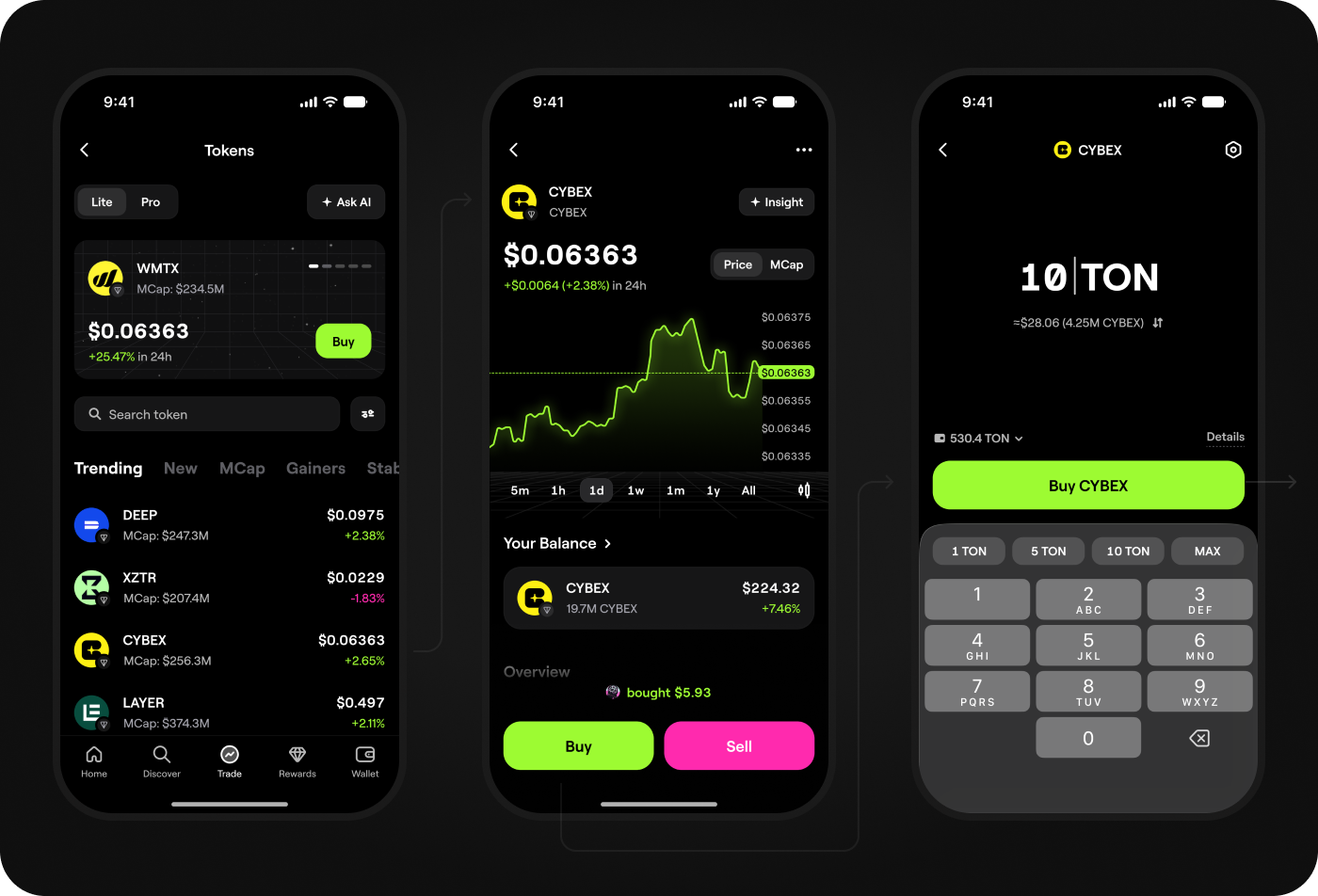
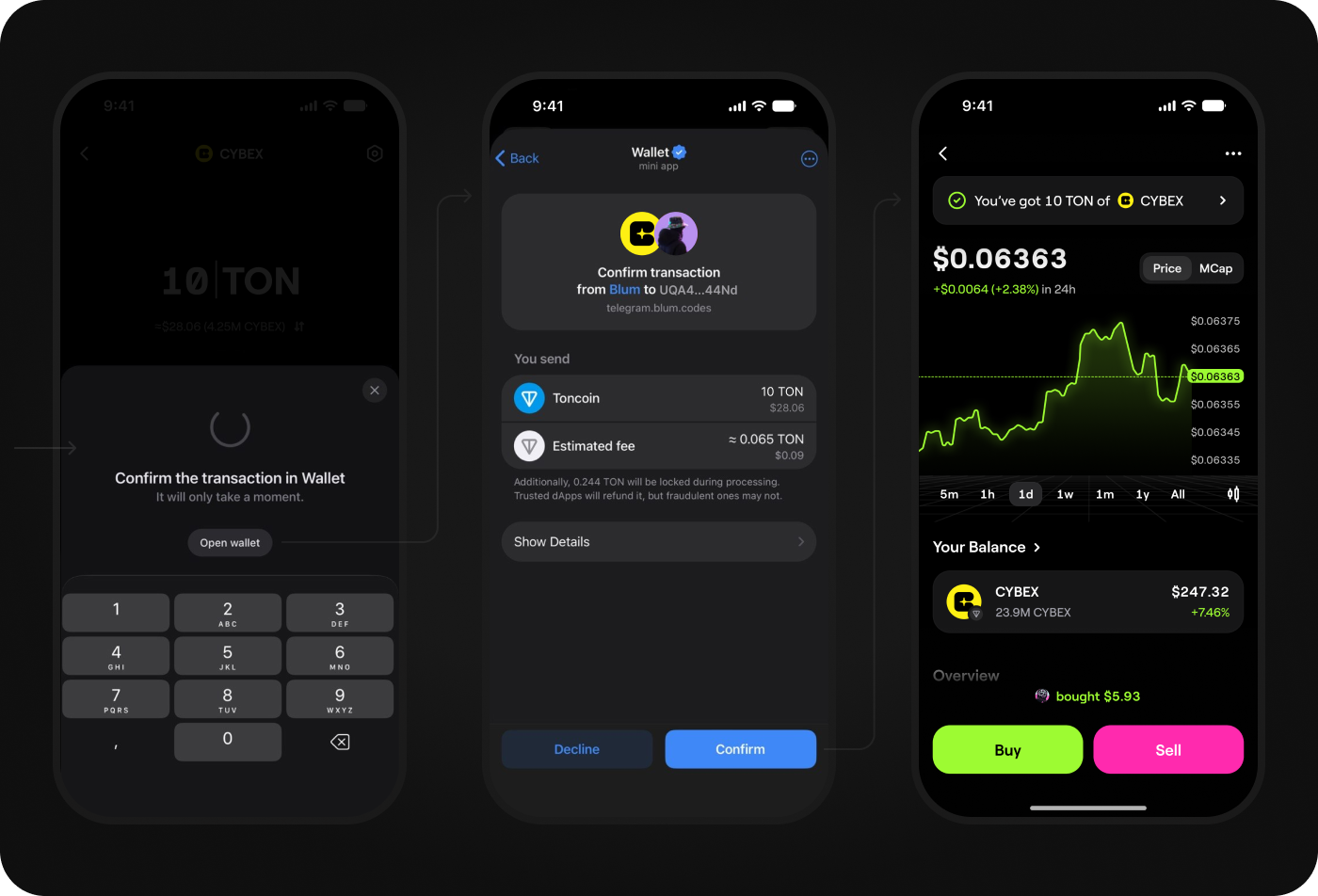
Before: Every trade required
external wallet confirmation
Users selected a token and entered the amount inside Blum, but could not complete the trade there. At confirmation, they had to leave the buy and sell flow, approve the transaction in a connected wallet, return to Blum, and wait until the trade was completed and reflected in their balance.
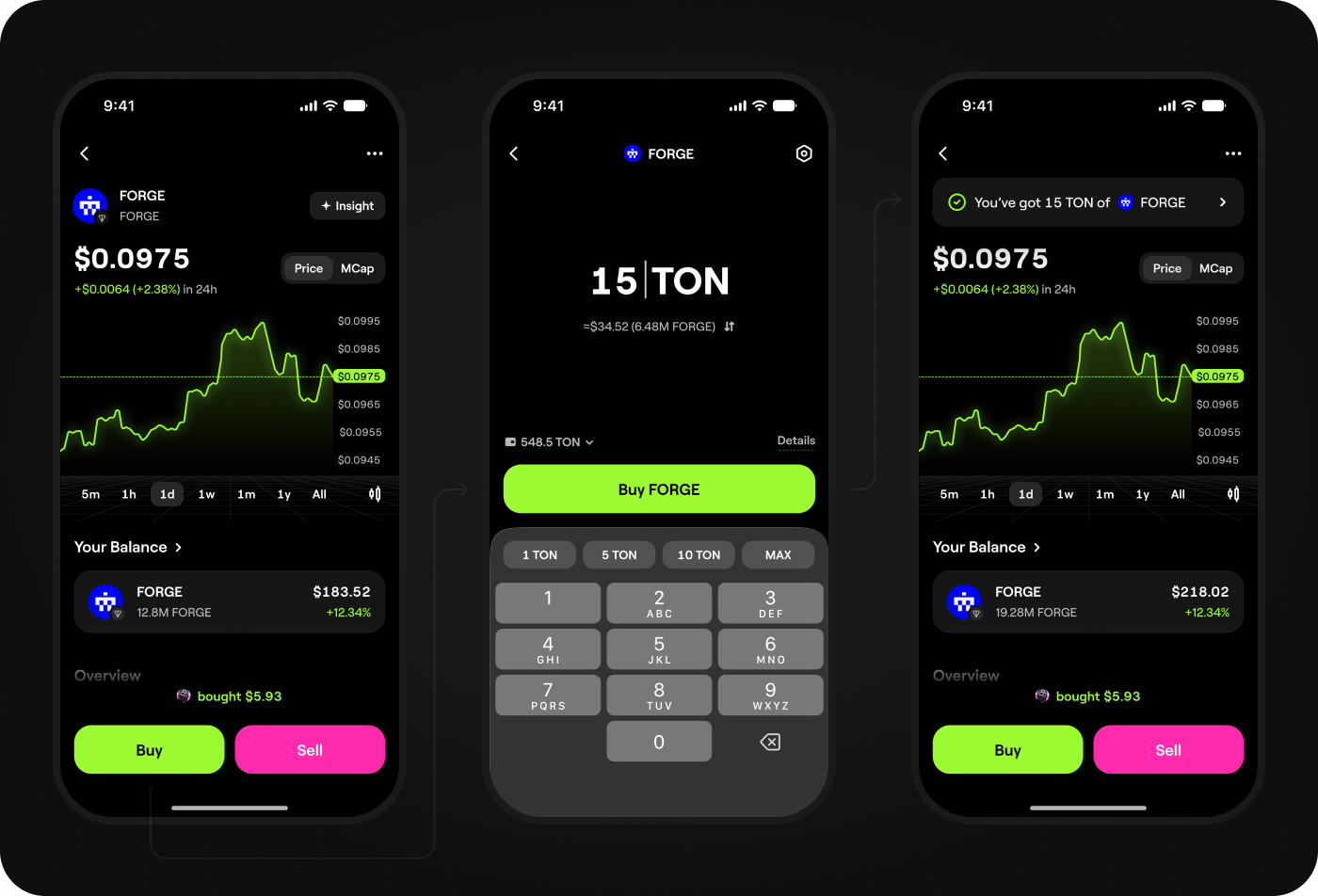
After: Buy and sell in three steps
With the Spot Wallet, users could buy and sell tokens directly from their available balance inside Blum. They no longer had to switch to a connected wallet for every trade, so the buy and sell flow became shorter, clearer, and easier to complete — from amount entry to trade completion in one continuous flow.
SOLUTION 1
Removed external confirmation from Spot trading
I changed the Spot buy and sell flow from external wallet confirmation to balance-
based execution through a dedicated self-custody Spot Wallet. Users could deposit
into their Spot Wallet once, then buy or sell tokens directly from their available
balance. This removed connected wallet confirmation from every trade and reduced
the flow from six steps to three.
Before: Every trade required external wallet confirmation
Users selected a token and entered the amount inside Blum, but could not complete
the trade there. At confirmation, they had to leave the buy and sell flow, approve the
transaction in a connected wallet, return to Blum, and wait until the trade was
completed and reflected in their balance.
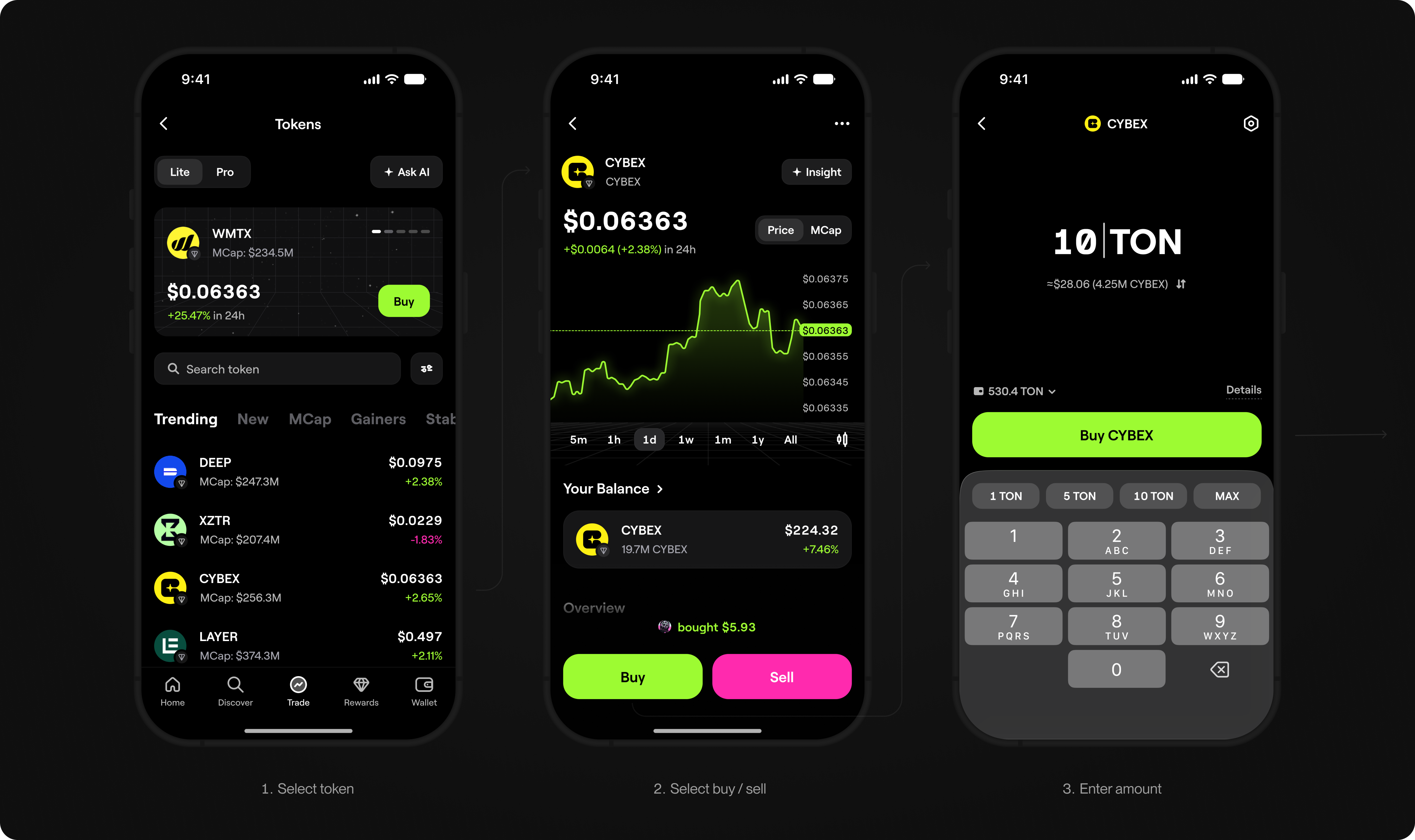
After: Buy and sell in three steps
With the Spot Wallet, users could buy and sell tokens directly from their available
balance inside Blum. They no longer had to switch to a connected wallet for every
trade, so the buy and sell flow became shorter, clearer, and easier to complete —
from amount entry to trade completion in one continuous flow.
SOLUTION 2
Simplified deposits and
made sending safer
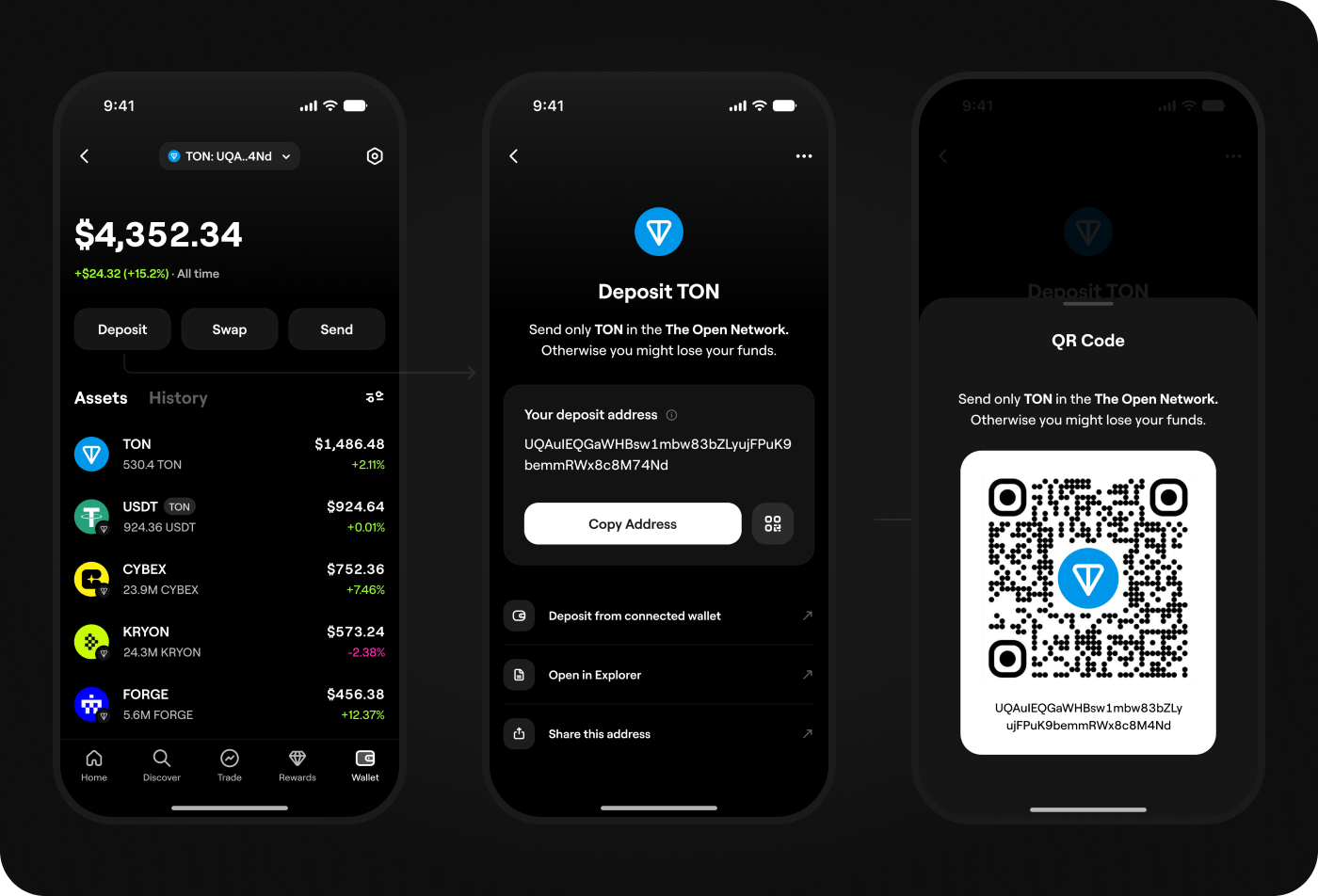
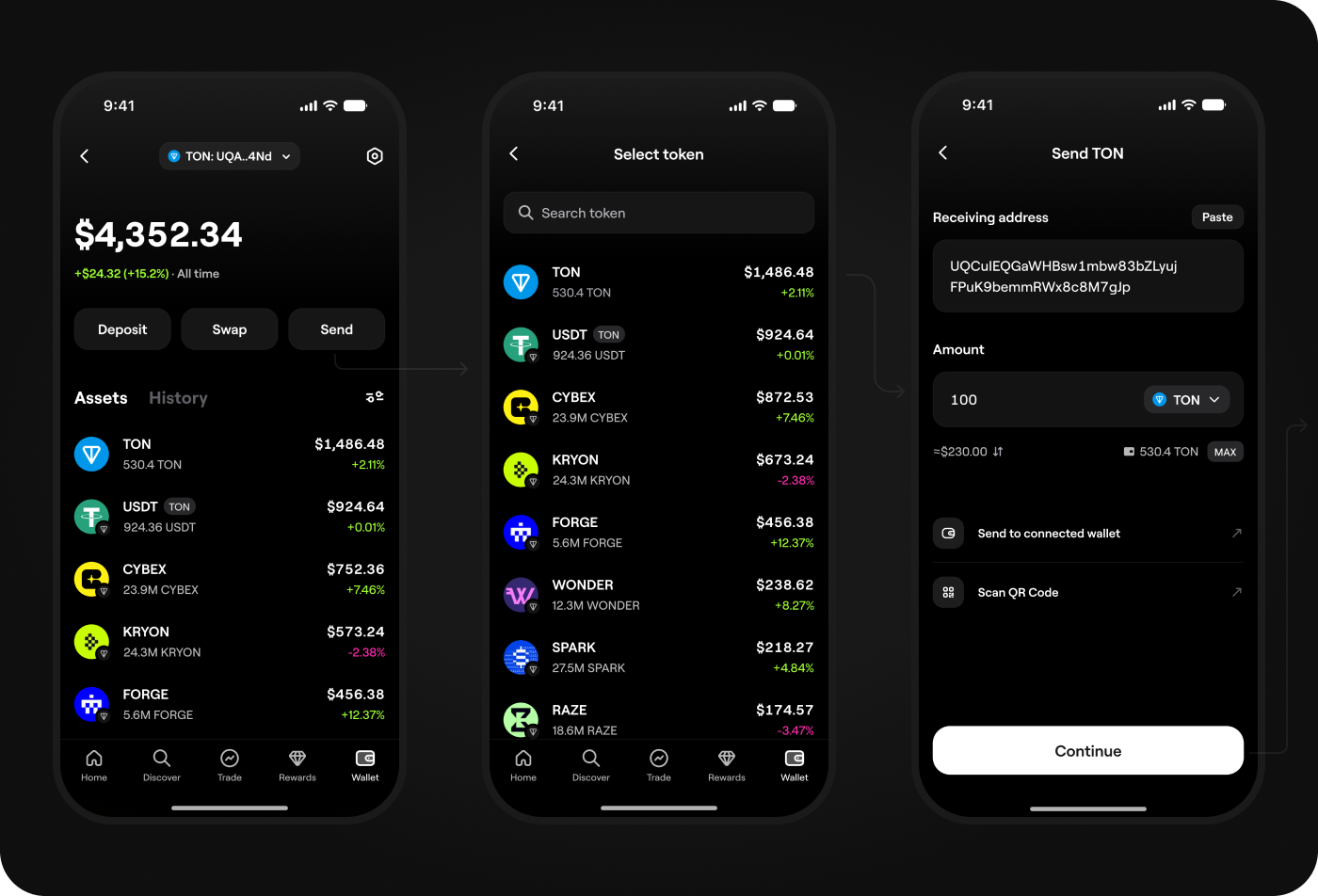
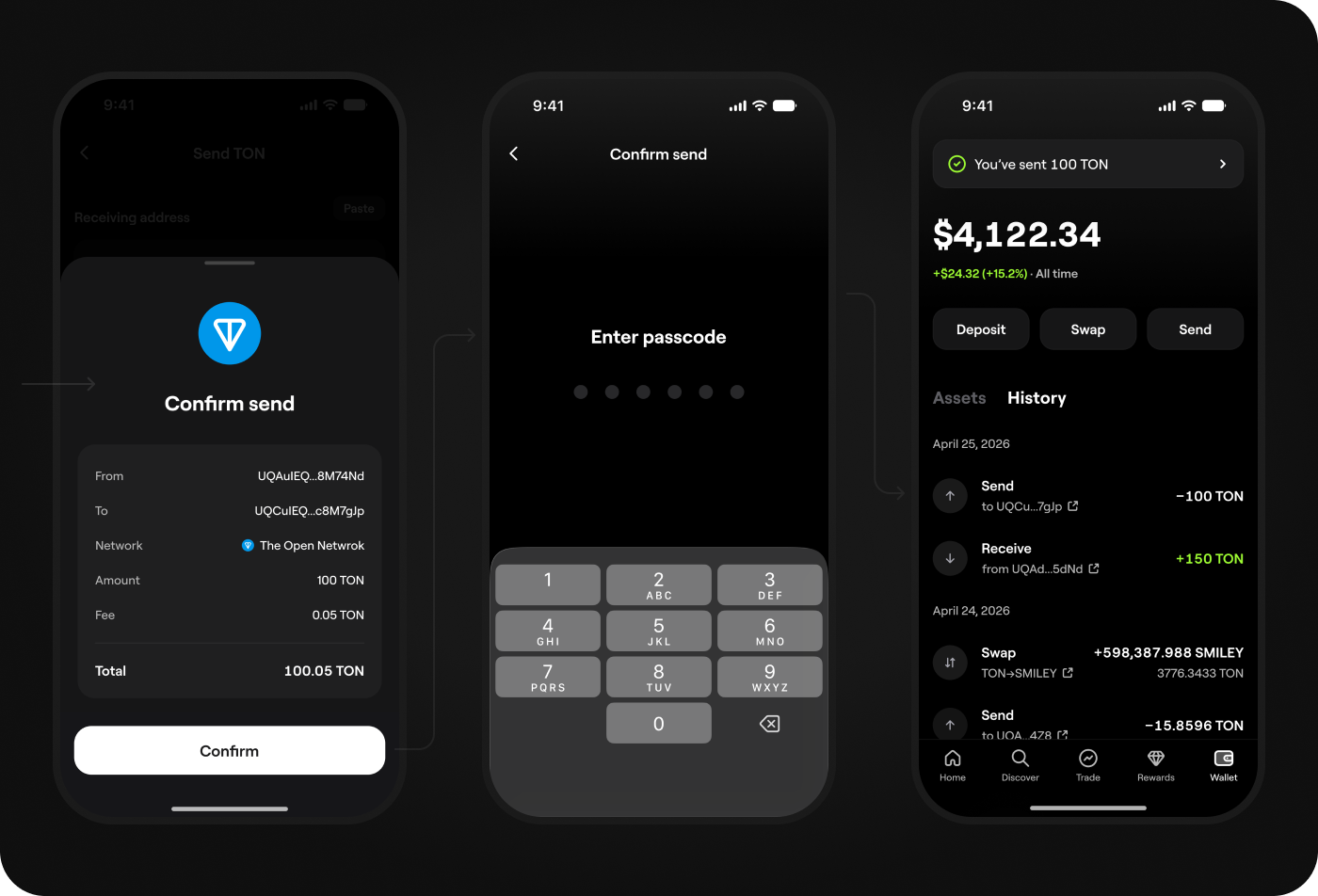
I designed deposit and send flows around two priorities: fast deposits and safe transfers. Users could deposit via wallet address, QR code, or connected wallet transfer, then use the balance for trading.
Before sending funds, users reviewed the receiving address, network, amount, fee, and total. This helped prevent incorrect transfers and potential loss of funds. An optional passcode added an extra layer of protection in wallet settings.
Deposit flow
Send flow: Enter details
Send flow: Confirmation
SOLUTION 2
Simplified deposits and made sending safer
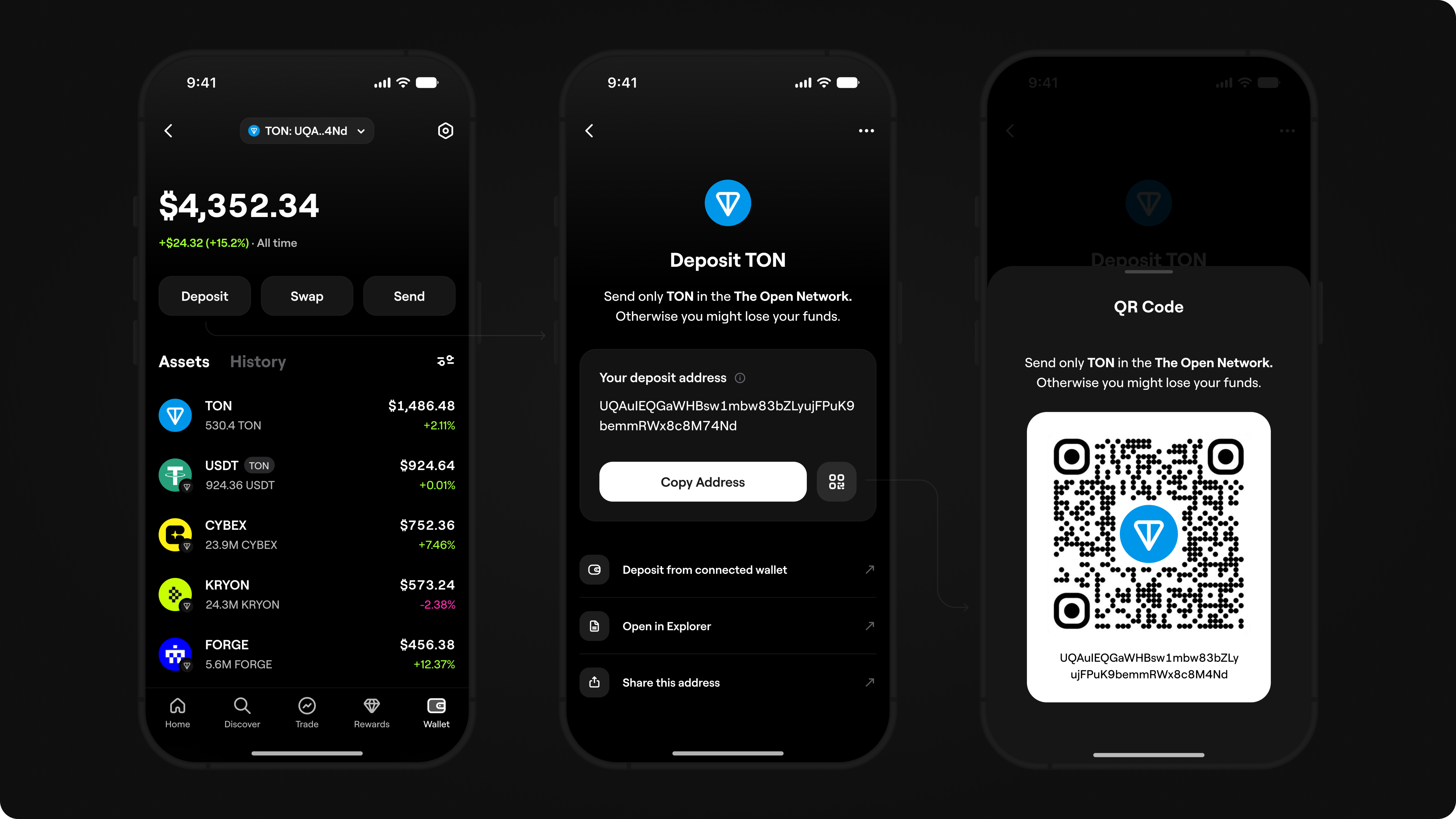
I designed deposit and send flows around two priorities: fast deposits and safe
transfers. Users could deposit via wallet address, QR code, or connected wallet
transfer, then use the balance for trading.
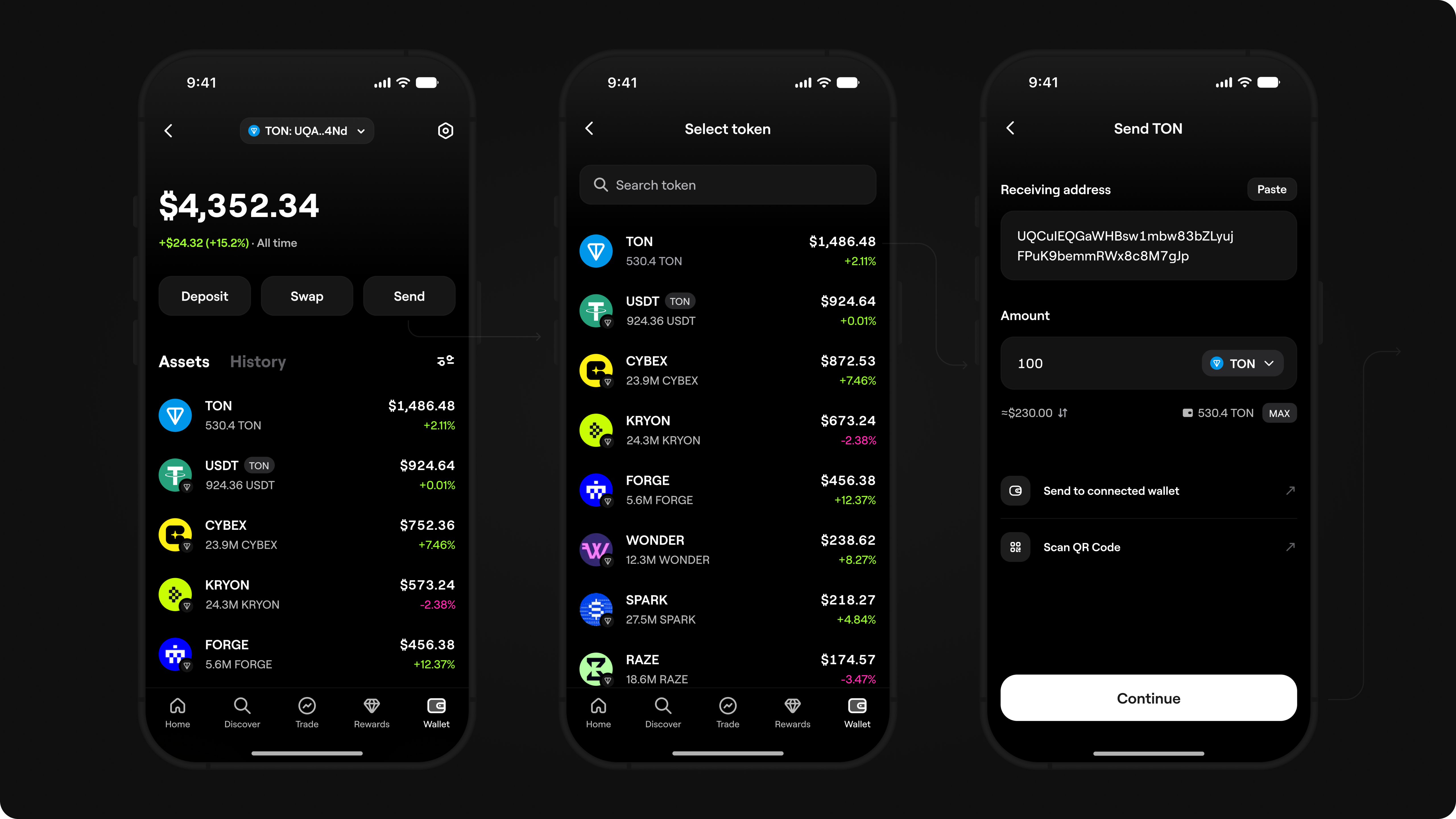
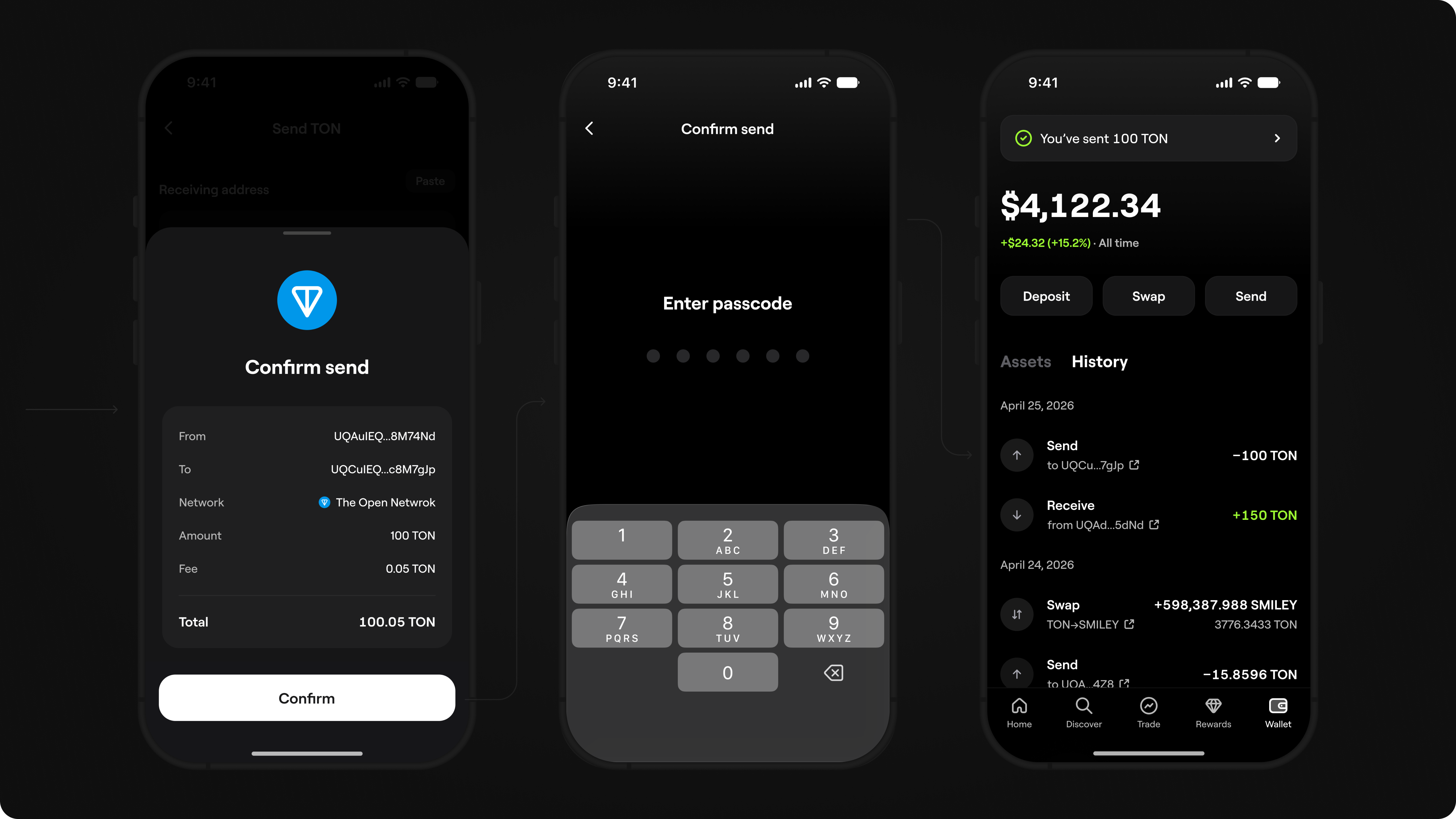
Before sending funds, users reviewed the receiving address, network, amount,
fee, and total. This helped prevent incorrect transfers and potential loss of funds.
An optional passcode added an extra layer of protection in wallet settings.
Deposit flow
Send flow: Enter details
Send flow: Confirmation
SOLUTION 3
Built a dedicated Perps wallet
for Perpetual Trading
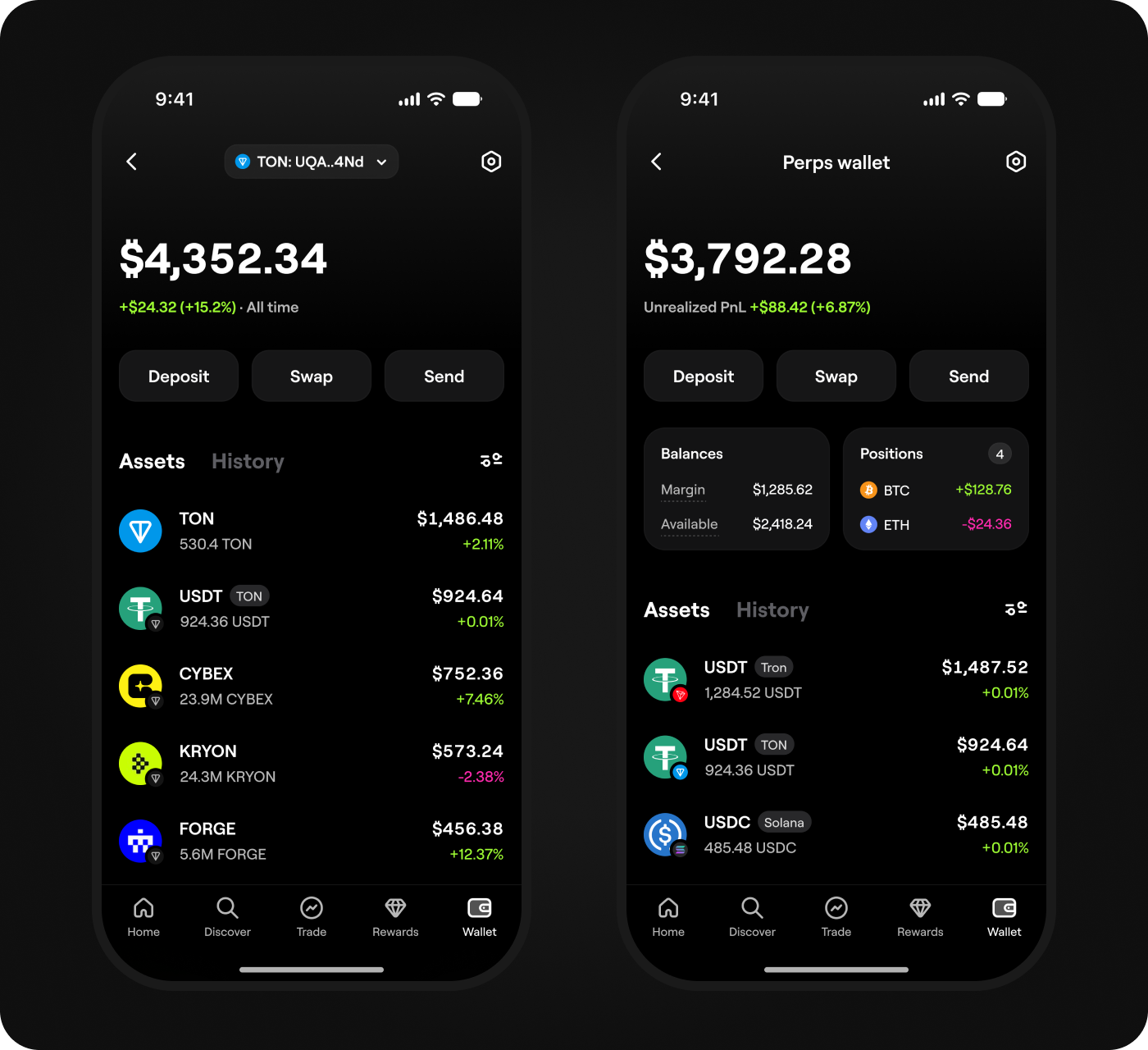
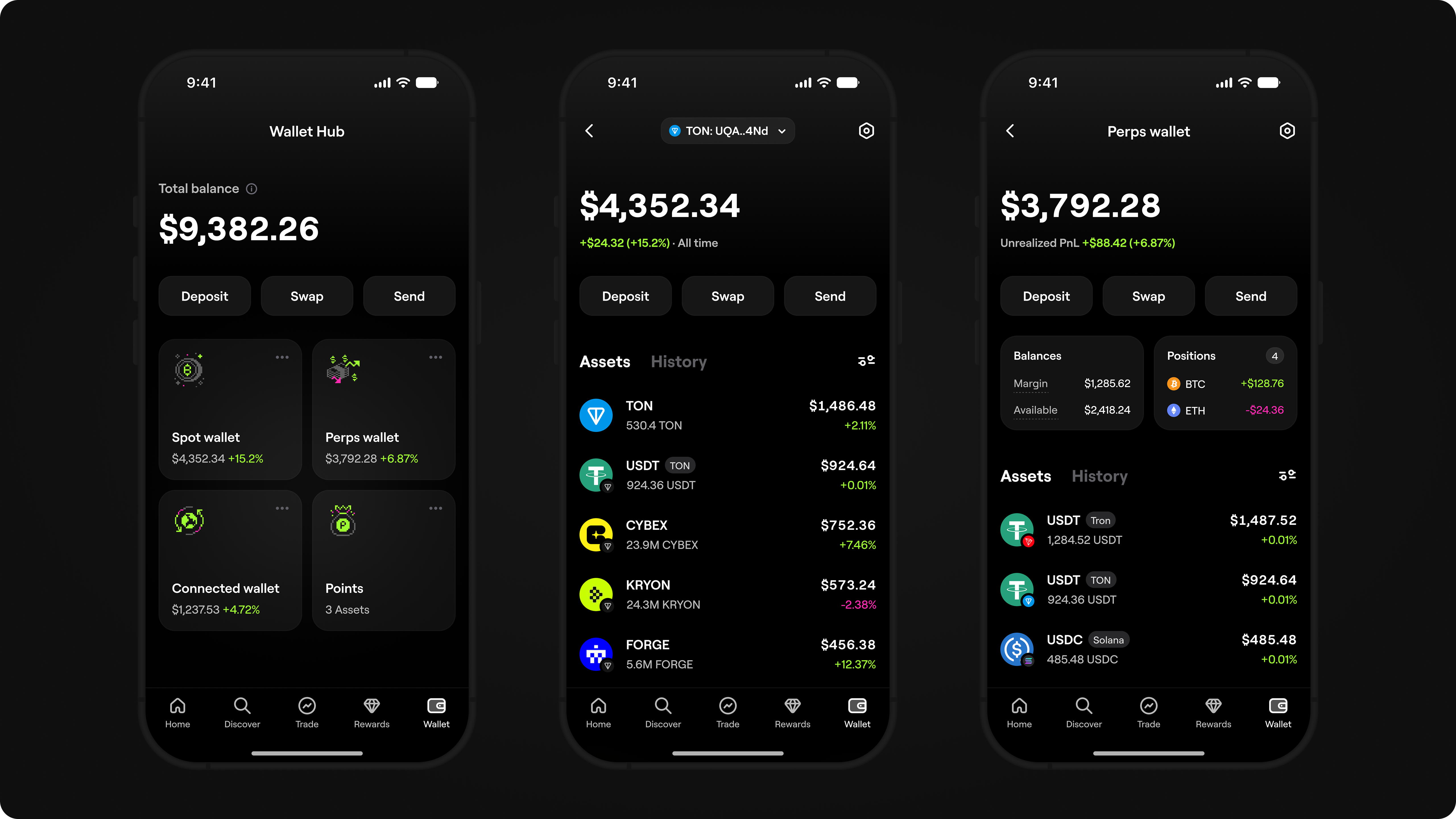
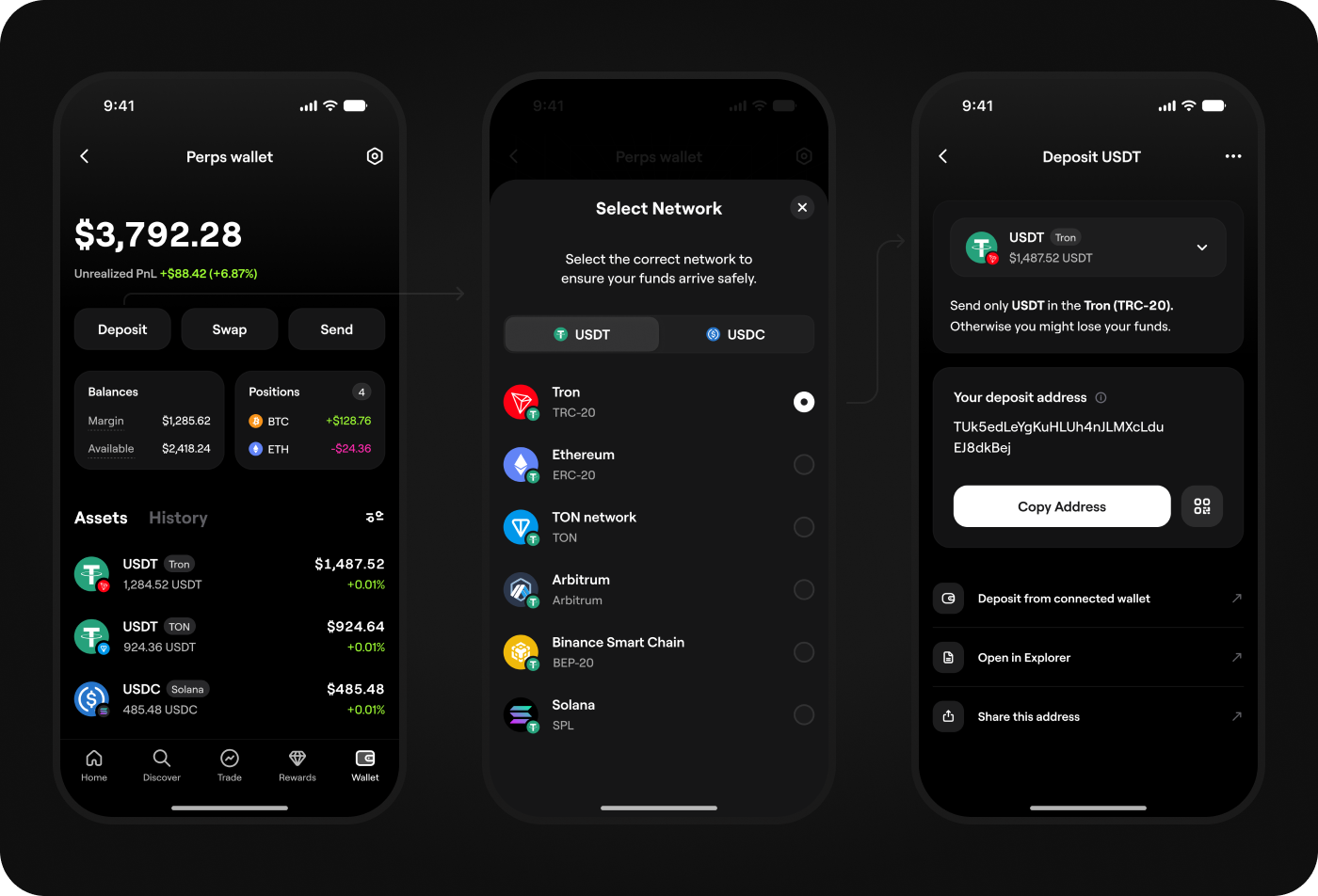
I designed a dedicated Perps Wallet where users could deposit, transfer, withdraw, and track their Perpetual Trading balances in one place. It showed margin balance, available balance, and unrealized PnL, clarifying what was available for trading and what was being used as margin.
Users could choose USDT or USDC and a network before receiving the correct deposit address. Withdrawals included a review step with key transfer details and optional passcode protection.
SOLUTION 3
Built a dedicated Perps wallet for Perpetual Trading
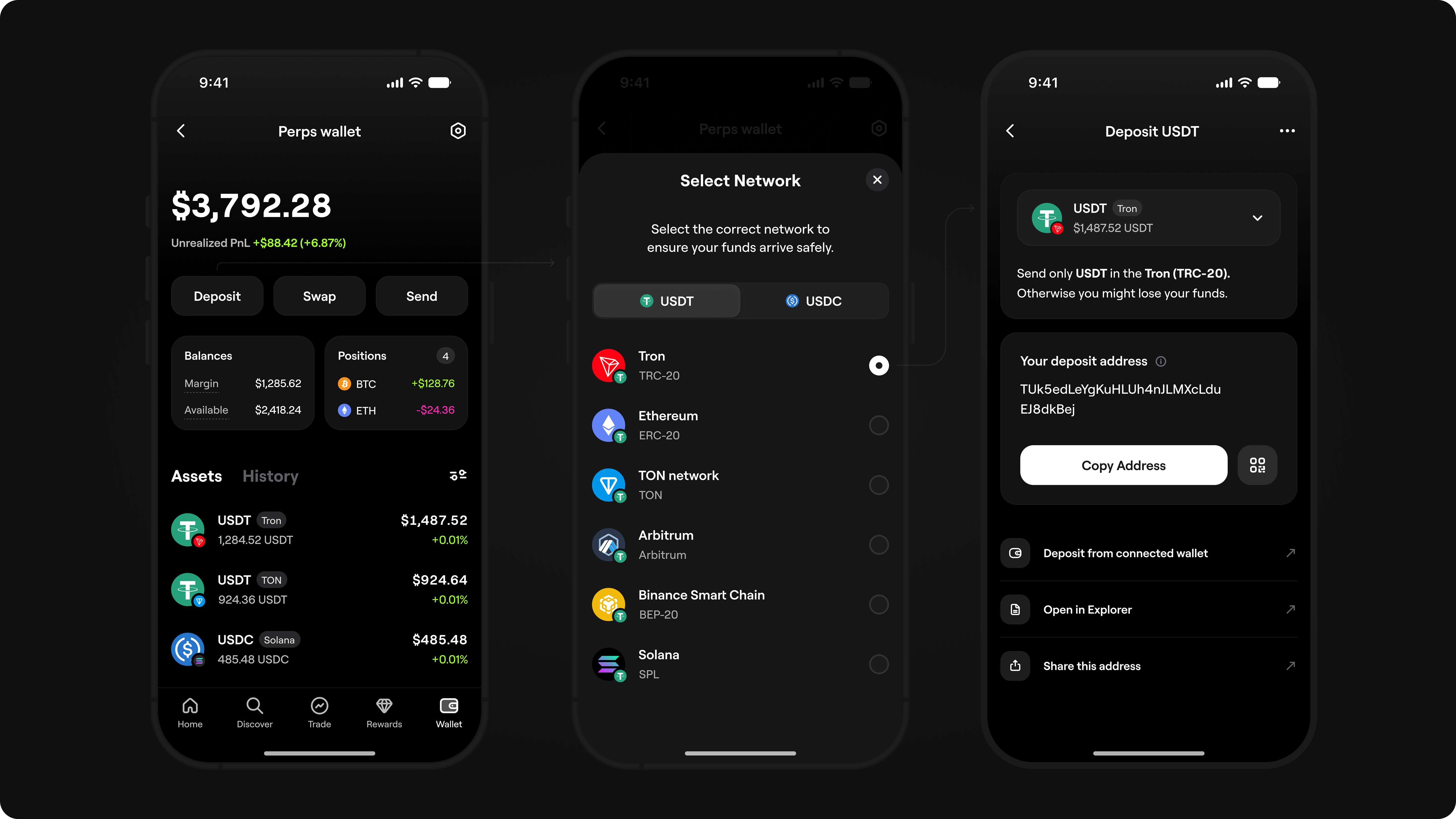
I designed a dedicated Perps Wallet where users could deposit, transfer, withdraw,
and track their Perpetual Trading balances in one place. It showed margin balance,
available balance, and unrealized PnL, clarifying what was available for trading and
what was being used as margin.
Users could choose USDT or USDC and a network before receiving the correct
deposit address. Withdrawals included a review step with key transfer details and
optional passcode protection.
SOLUTION 4
Designed wallet management
and safety flows
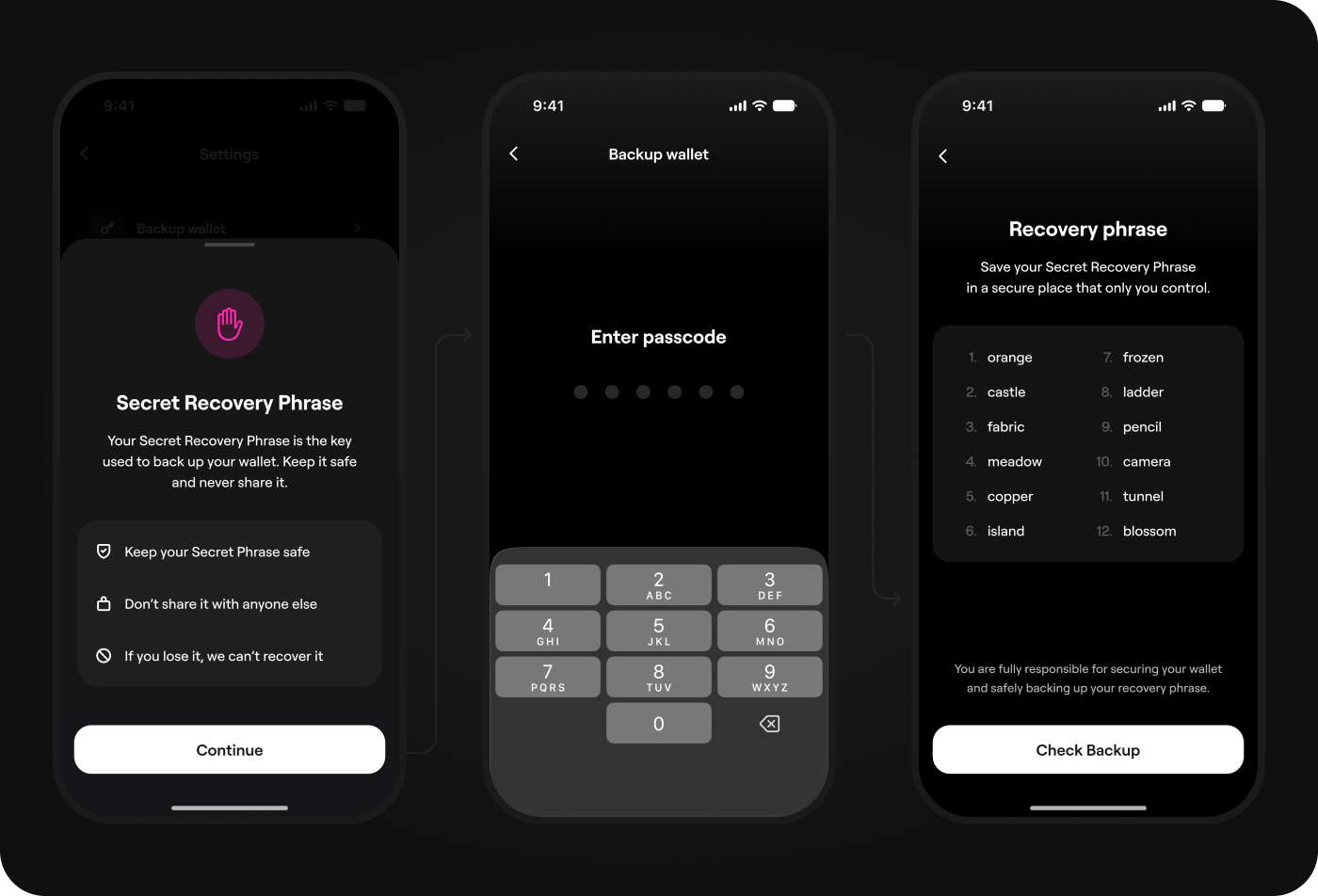
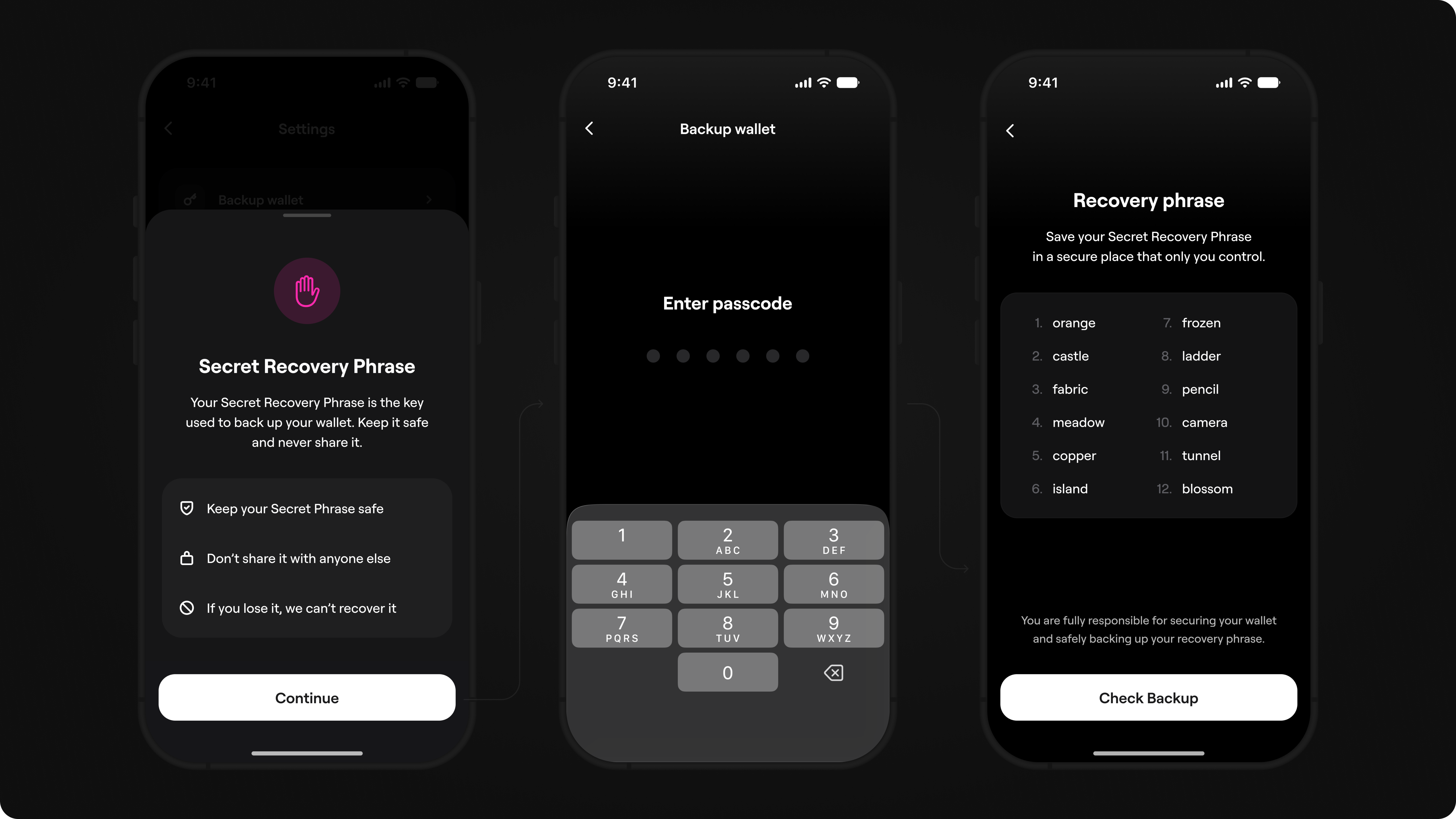
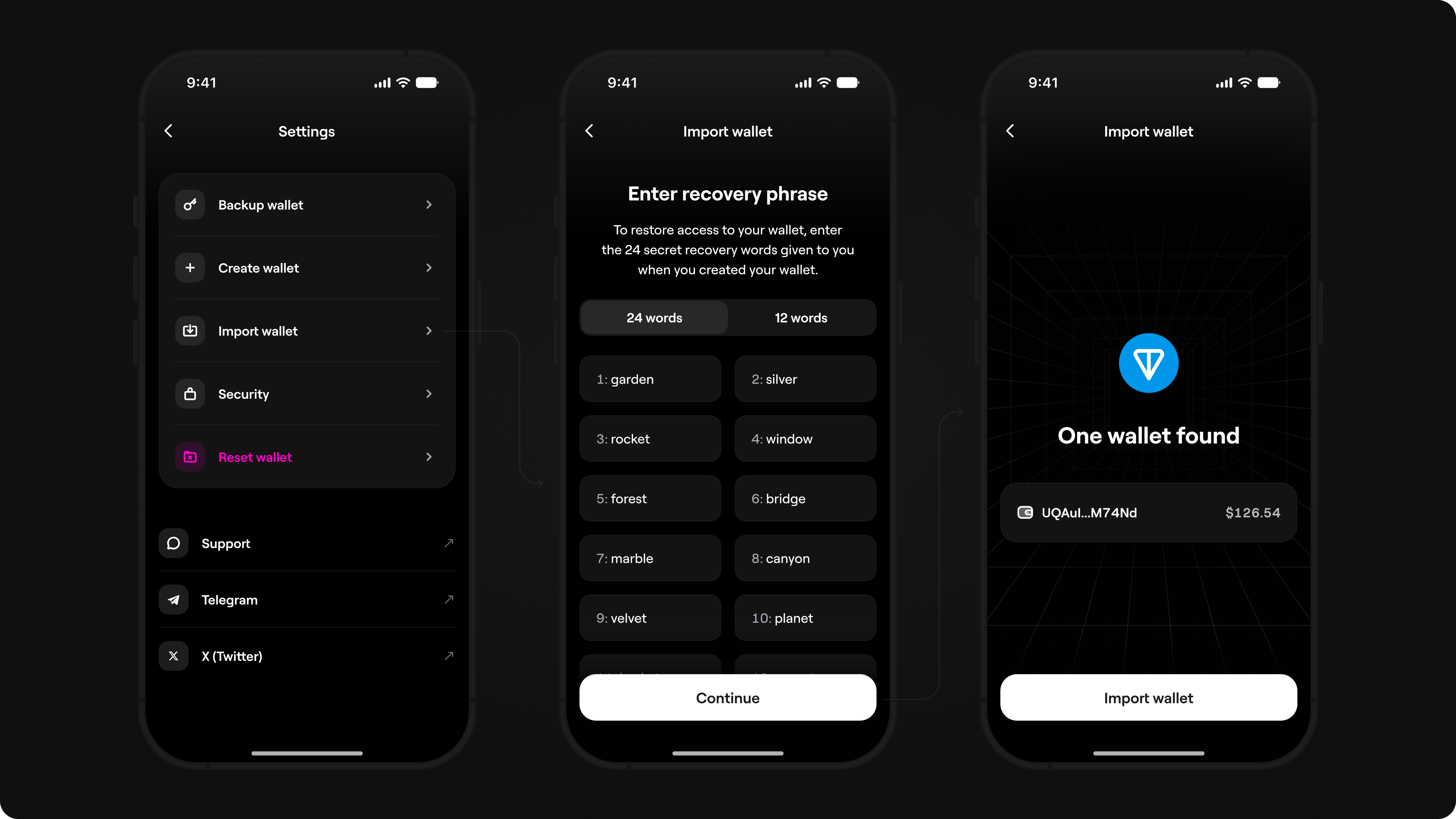
I designed the flows for backing up, importing, and resetting a self-custody wallet, as well as setting an optional passcode for extra protection.
These flows gave users clearer control over wallet access and sensitive operations. The passcode added an extra confirmation step before changing critical settings or confirming sensitive actions.
Backup
Import
SOLUTION 4
Designed wallet management and safety flows
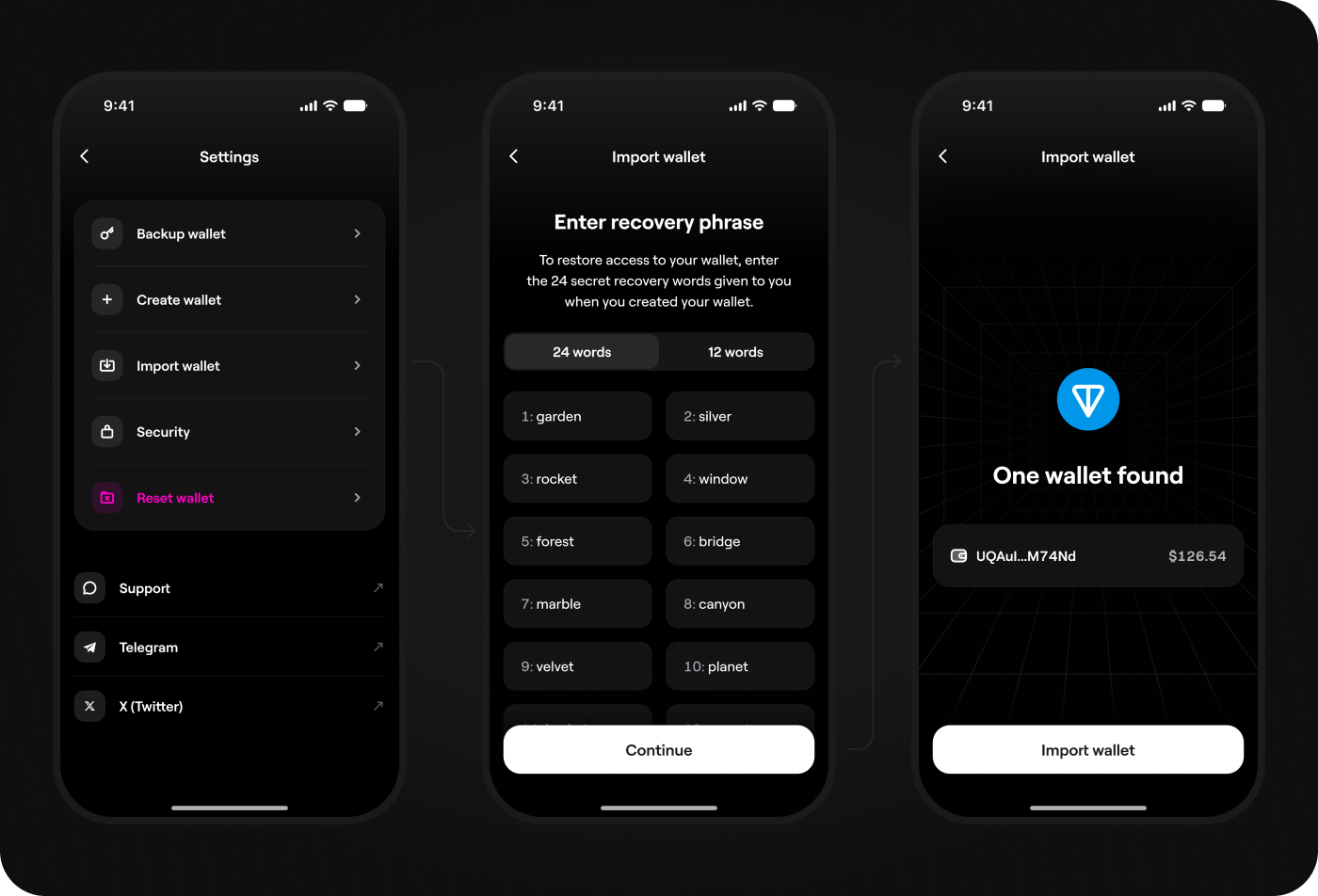
I designed the flows for backing up, importing, and resetting a self-custody wallet,
as well as setting an optional passcode for extra protection.
These flows gave users clearer control over wallet access and sensitive operations.
The passcode added an extra confirmation step before changing critical settings
or confirming sensitive actions.
Backup
Import
User testing
I tested the wallet experience with 9 respondents and ran quick internal usability tests before scaling the solution. I compared user feedback and observed behavior across four key questions:
- 1 .Does Spot Wallet make buy and sell flows easier to complete by letting users trade directly from an in-app balance?
- 2 .Do deposit and send flows help users move funds quickly and safely by making the asset, network, fee, and recipient details clear?
- 3 .Does the dedicated Perps Wallet help users understand and manage their Perps funds without mixing them with Spot assets or funds in a connected wallet?
- 4 .Do wallet management and safety flows give users clear control over backup, import, reset, and passcode protection?
UX Validation Results
1. Spot Wallet became
the stronger trading path

After rollout, users traded more often through the internal Spot Wallet than through a connected wallet. This confirmed that balance-based execution made buy and sell flows easier to complete.
2. Clearer funding flows
Users had clear ways to deposit into Spot and Perps wallets and send funds when needed. The protected send flow helped them review key transfer details before confirming the transfer.
3. Perps funds were
easier to manage
Separating the Perps Wallet from the Spot Wallet gave users one clear place to track Perps balances, deposit, transfer, and send funds without mixing margin balance with Spot assets or connected wallet funds.
4. Users wanted more
wallet control

They asked for better multi-wallet management, balance display in different currencies, language settings, and more supported networks for Perps deposits.
Results
I designed dedicated Spot and Perps wallets that made trading and wallet management more efficient inside Blum. The Spot Wallet reduced the buy and sell flow from six steps to three and helped drive 30% more trades. The Perps Wallet served 1.85M+ traders, while wallet-related support tickets fell by 90%.
6 → 3 steps
Buy and sell flows
+30%
Increase in trades
1.85M+
Perps traders using Perps wallets
−90%
Wallet-related support tickets
Key Learning
Not all confirmations in a trading product play the same role. In buy and sell flows, extra confirmation can slow users down, break trading context, and create drop-off before completion. But in wallet management, confirmation protects users from costly or irreversible mistakes.
The key learning: wallet architecture should make frequent trading actions faster while adding more control where users manage deposits, transfers, withdrawals, wallet access, backup, import, reset, and passcode protection.
UX Testing
I tested the wallet experience with 9 respondents and ran quick internal
usability tests before scaling the solution. I compared user feedback and
observed behavior across four key questions:
- 1 .Does Spot Wallet make buy and sell flows easier to complete
by letting users trade directly from an in-app balance? - 2 .Do deposit and send flows help users move funds quickly and safely
by making the asset, network, fee, and recipient details clear? - 3 .Does the dedicated Perps Wallet help users understand and manage
their Perps funds without mixing them with Spot assets or funds
in a connected wallet? - 4 .Do wallet management and safety flows give users clear control over
backup, import, reset, and passcode protection?
UX Validation Results
1. Spot Wallet became the stronger trading path
After rollout, users traded more often through the internal Spot Wallet
than through a connected wallet. This confirmed that balance-based
execution made buy and sell flows easier to complete.
2. Clearer funding flows
Users had clear ways to deposit into Spot and Perps wallets
and send funds when needed. The protected send flow helped
them review key transfer details before confirming the transfer.
3. Perps funds were easier to manage
Separating the Perps Wallet from the Spot Wallet gave users one clear
place to track Perps balances, deposit, transfer, and send funds without
mixing margin balance with Spot assets or connected wallet funds.
4. Users wanted more wallet control
They asked for better multi-wallet management, balance display
in different currencies, language settings, and more supported
networks for Perps deposits.
Results
I designed dedicated Spot and Perps wallets that made trading and wallet
management more efficient inside Blum. The Spot Wallet reduced the buy and
sell flow from six steps to three and helped drive 30% more trades. The Perps
Wallet served 1.85M+ traders, while wallet-related support tickets fell by 90%.
6 → 3 steps
Buy and sell flows
1.85M+
Perps traders using Perps wallets
+30%
Increase in trades
−90%
Wallet-related support tickets
Key Learning
Not all confirmations in a trading product play the same role. In buy and sell flows,
extra confirmation can slow users down, break trading context, and create drop-off
before completion. But in wallet management, confirmation protects users from
costly or irreversible mistakes.
The key learning: wallet architecture should make frequent trading actions faster
while adding more control where users manage deposits, transfers, withdrawals,
wallet access, backup, import, reset, and passcode protection.